
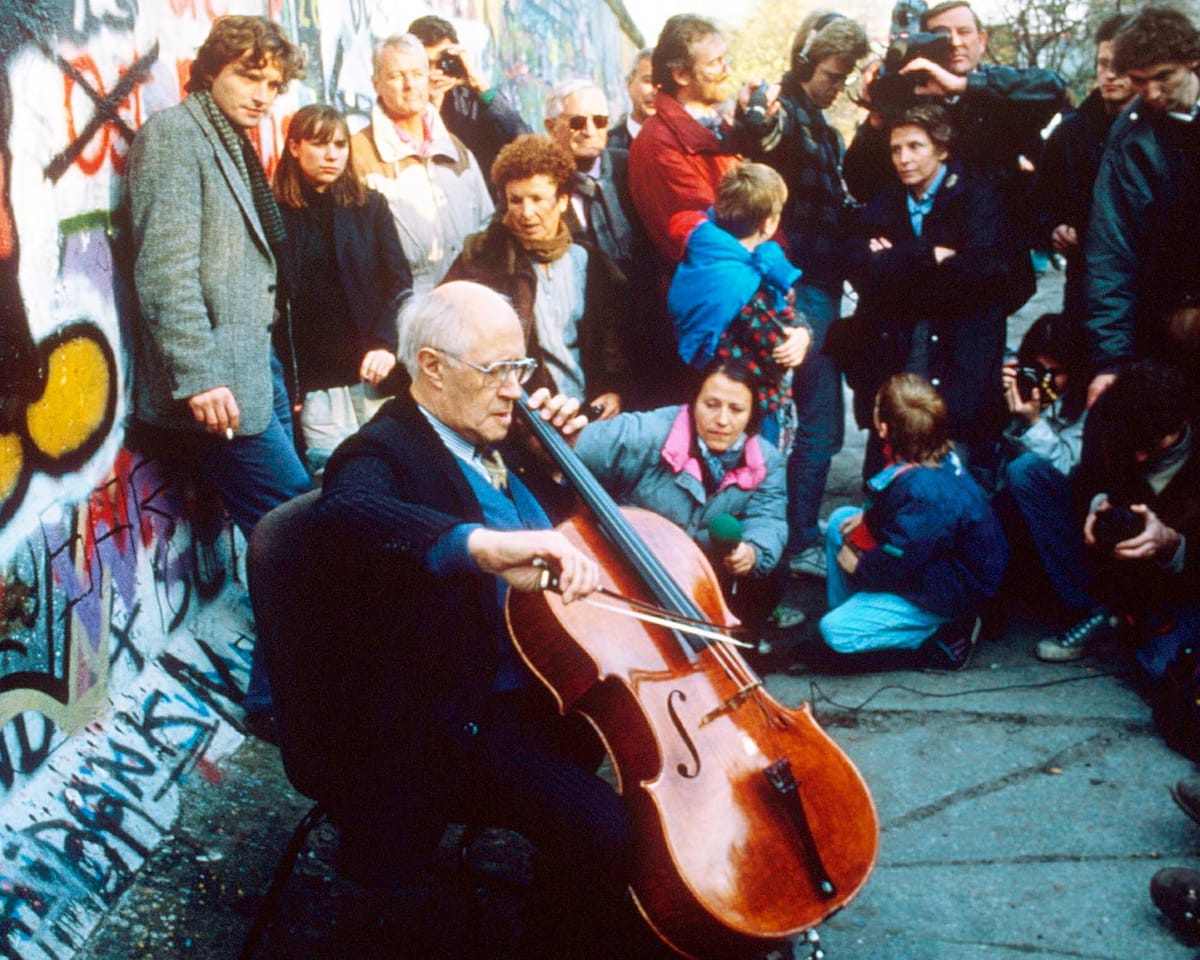
One of my earliest concert memories dates back to October 1965, when my father drove us to Manchester to hear Mstislav Rostropovich perform at the Free Trade Hall. He played Dvořák’s cello concerto with the Moscow Philharmonic, who opened with a symphony by Tikhon Khrennikov and concluded with one by Brahms. Rostropovich’s masterful playing left a deep impression on me—I had never encountered a musician like him before.
At the time, however, tensions of the Cold War were at their peak. The Cuban missile crisis had unfolded less than three years earlier, the Berlin Wall was still a recent division, and the Vietnam War was intensifying. That summer, I had read *The Spy Who Came in from the Cold*, and the film adaptation, starring Richard Burton, was set to release by year’s end.
A performance by a Soviet orchestra, featuring a piece by a prominent Soviet cultural figure and a renowned cellist whose advocacy for human rights was not yet widely recognized—and whose background included a Stalin Prize—carried heavy political undertones. It could have been seen as more than just an artistic event, perhaps even as an engagement with an ideological opponent.
Politics certainly played a role. The Soviet Union would have assessed the risk of another high-profile defection—Rudolf Nureyev had famously defected just four years earlier—but likely deemed the cultural exchange valuable in projecting influence. Similarly, British authorities would have considered these factors before granting visas.
Many in the audience, too, attended with more than music in mind. My father, a devoted communist and music enthusiast, owned Rostropovich’s recording of the Dvořák concerto. Yet I suspect he bought tickets not only for the music but also to express solidarity with the Soviet visitors and to support efforts in easing tensions between Britain and the USSR.
I don’t recall any protests inside or outside the Free Trade Hall that evening, though I could be mistaken. If so, I apologize for the oversight. But their absence wouldn’t have surprised those familiar with the era. The 1960s were a time of near-total estrangement between the West and Soviet-aligned nations, with travel restricted for ordinary citizens on either side. Yet cultural exchanges persisted.
Despite occasional defections, Soviet musicians and dancers—even the Red Army Ensemble—toured regularly during the Cold War. Artists like Sviatoslav Richter, David and Igor Oistrakh, Emil Gilels, Gennady Rozhdestvensky, and Rostropovich frequently performed in the West, while figures such as Leonard Bernstein, Glenn Gould, and Britain’s John Ogdon achieved acclaim in Moscow.
Read next
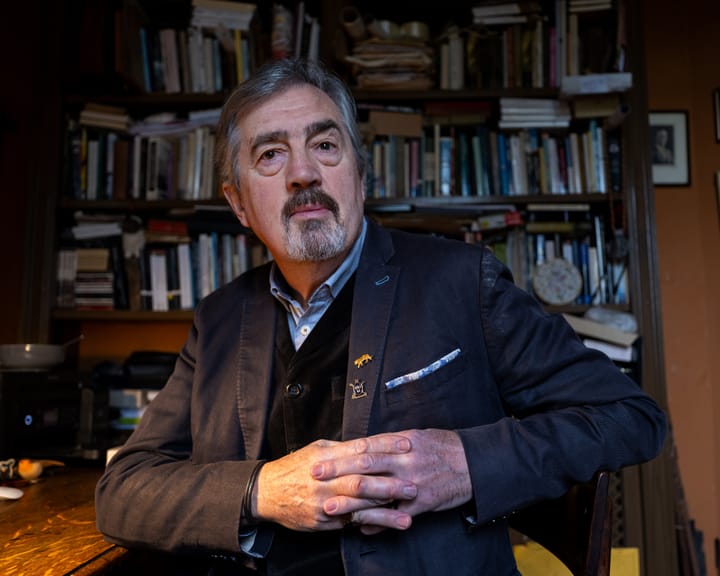
Sebastian Barry's The Newer World: a near-miracle of storytelling review
Sebastian Barry’s latest novel, *The Newer World*, gives voice to Tennyson Bouguereau, a formerly enslaved man navigating post-Civil War America. Through Tennyson’s recollections, the narrative revives the perennial question: is history better served by novelists or historians? Historians might demur, but as Barry illustrates, fiction can fill
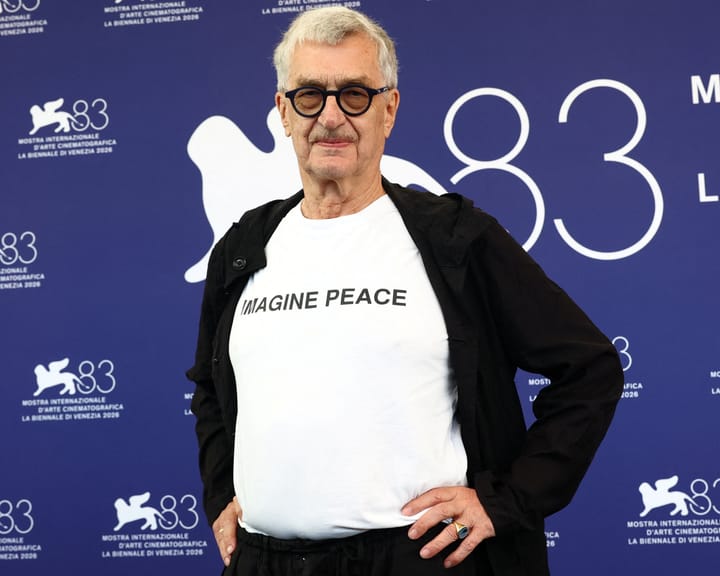
Wim Wenders says film-makers should not avoid political involvement
Filmmaker Wim Wenders has clarified his earlier comments on the relationship between cinema and politics. Speaking at the Venice film festival, he stated that he does not believe filmmakers should completely avoid political engagement.
Earlier in the year, while serving as jury president at the Berlin film festival, Wenders told
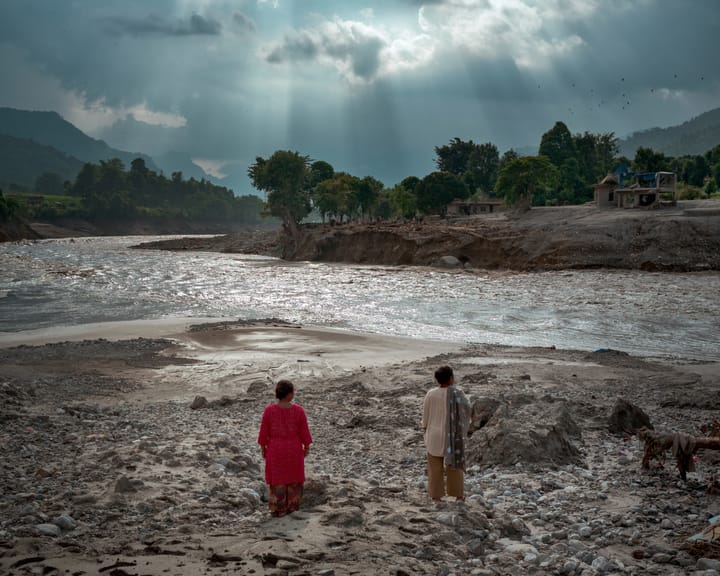
The week around the world in 20 images
The week witnessed a series of catastrophic events, including the devastating floods along the Nepal-Tibet border, Russian missile attacks on Kyiv, the rapid spread of the Plaskett Fire across California, and the vibrant celebration of the Notting Hill carnival. The following images, captured by top photojournalists, document these moments.