
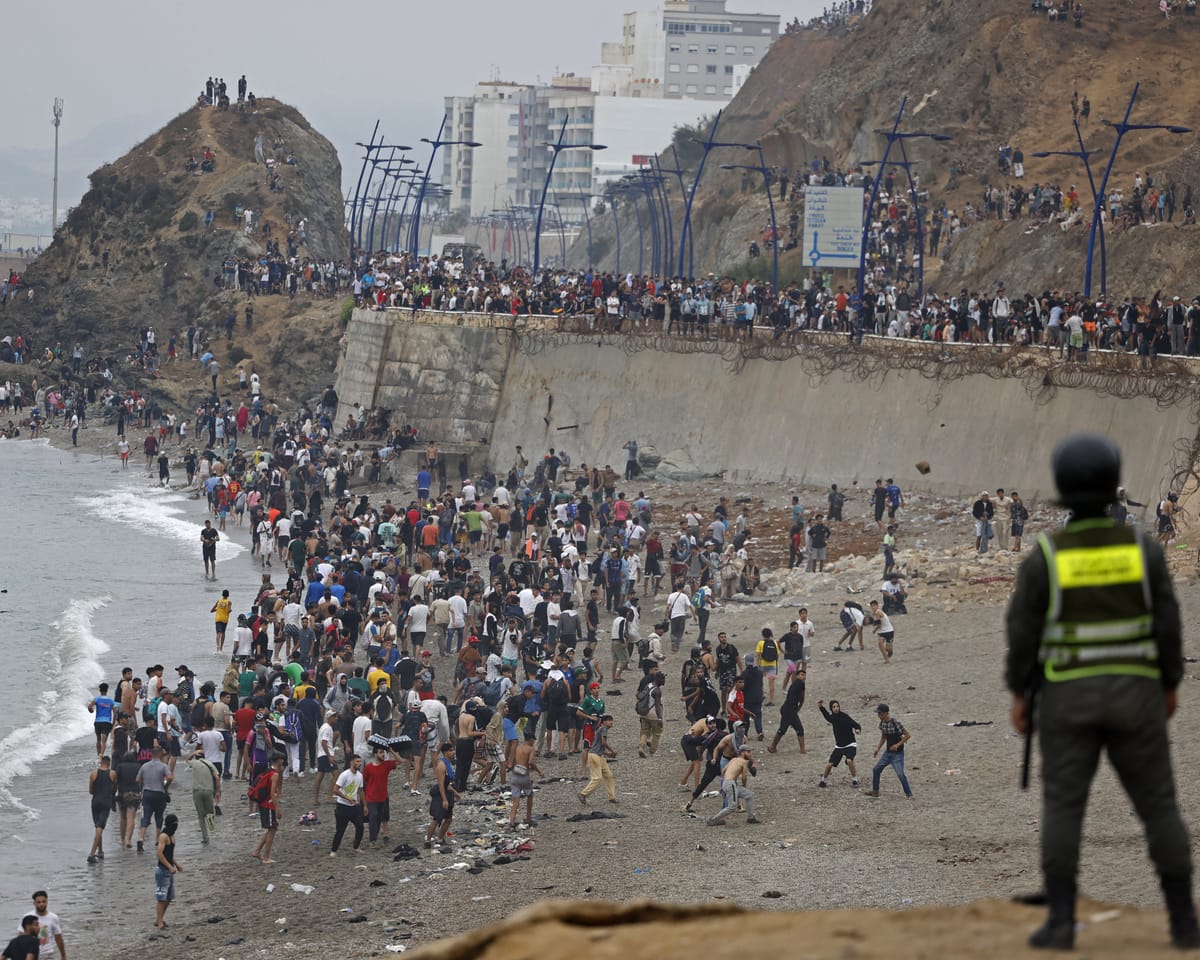
No evidence Morocco planned or orchestrated the Ceuta crisis, Sánchez insists
Sánchez insists that “no one has provided the government with evidence” that would clearly show that the Ceuta crisis was “orchestrated or carried out by Moroccan authorities.”
He says Morocco’s response could be divided into distinctive phases, with a 10-hour breakdown in their border control at the peak of the crisis. But he says their cooperation with Spain before and afterwards worked well, preventing thousands of further illegal crossings.
He says it remains to be determined what caused the 10-hour breakdown and whether it was their “inability to act or a failure to act.”
But he insists that he has no evidence that Morocco “planned or orchestrated this episode.”
He says this needs to be properly investigated with all decisions grounded in facts, not speculations.
Key events
Belgium logs nearly 3,000 excess deaths during heatwaves this summer
Belgium logged nearly 3,000 excess deaths during successive heatwaves since June, health authorities said, days after this summer was confirmed as the hottest on record in the northern European nation, AFP reported.
Some 365 excess deaths were observed between 28 July and 16 August, as Belgium sweltered under a third heatwave, adding to the almost 2,600 excess deaths recorded during the previous two bouts of high temperatures, the Sciensano national public health institute said.
French, German, Polish ministers show united front in response to Russia's drone attack
French, German and Polish foreign ministers are meeting in Germany this morning for trilateral talks on the latest security situation in Europe, including Russia’s continued attacks on Ukraine and acts of sabotage in Europe.
The ministers endorsed Germany’s actions in response to the attempted Leipzig drone attack last month, including its order to close the Russian consulate in Bonn and the Russian cultural centre in Berlin. In retaliation, Russia told Germany to close branches of its Goethe Institute in Russia.
Germany’s Johann Wadephul said Germany has “always been ready to enter into a reasonable dialogue with Russia,” but its willingness to engage is based on a precondition of Moscow ending its aggression against Ukraine and attacks against Europe.
France’s Jean-Noël Barrot stressed that “it is Russia who is the aggressor,” with Ukraine and increasingly European countries facing aggressive actions ordered by Moscow. He added that “it’s not Ukraine, it’s not the Europeans, but it is systematically Vladimir Putin who goes further and further.”
Poland’s Radosław Sikorski said that Poland had summoned the Russian ambassador to Warsaw to express its condemnation of Russia’s actions, characterised as “state terrorism.” “We do not consent to the unpunished testing of our borders and hostile acts in our territories.”
Russia 'actively' preparing sabotage operations against Danish defence industry, intelligence agency says
Russia is “actively” preparing sabotage operations against Denmark, particularly its defence industry, Danish intelligence agency PET told AFP.
The warning came after EU countries summoned Russia’s envoys and discussed fresh sanctions after an explosive-laden drone incident in Germany that the bloc’s foreign policy chief said bore the marks of “state-sponsored terrorism.”
“The Russian intelligence services are actively preparing acts of sabotage targeting the defence industry in Denmark,” Danish Security and Intelligence Service (PET) said.
Emil Graesholm, PET head of counterintelligence, told newspaper Berlingske that the agency was sharing details about the methods “because they don’t need to look like a spy movie.”
Spanish opposition leader calls on PM Sánchez to resign, call elections over Ceuta crisis
Opposition leader Alberto Núñez Feijóo, of the People’s Party, directly referenced last night’s protests on Ceuta, saying that the people who took part wanted to "once again be a sovereign agent of its own policy."
He called for Sánchez to go – either for "incompetence" or for "complicity" – and to call early elections, due no later than August 2027.
Far-right Vox party leader Santiago Abascal accused Sánchez of "treason," saying that "an online hoax does not mobilise 100,000 people."
Sánchez ends his speech by directly addressing the residents of Ceuta, pledging to restore the situation back to "normal," and promising the government will "treat you with complete and absolute honesty."
Sánchez also defends his government’s track record on migration, saying his government focused on fighting criminal trafficking gangs while improving legal migration routes. He acknowledges challenges posed by the fact that people on the other side of the border in Ceuta have eight times lower income per capita.
He pushes to fully integrate Ceuta and Melilla with the EU’s customs union, saying Ceuta and Melilla must be treated as "an integral part of Europe’s past and future."
Sánchez explains why his government did not commit to Nato’s 5% target on defence spending, arguing that Spain needs to respond to different pressures on the southern border, including cybersecurity and cyber intelligence measures.
He also strongly pushes back against suggestions that the government had been explicitly warned about the possibility of crisis. He says that all the reports sent to authorities did not "anticipate the scale or probability of what eventually happened."
He points to misinformation on social media platforms such as Facebook, Instagram and TikTok incorrectly claiming that the border was open. His intelligence so far shows no significant role for any state actors like Morocco, Russia or Israel behind these posts, pointing instead at criminal networks of smugglers.
Morning opening: Sánchez to discuss Ceuta crisis in Spanish parliament
Spanish prime minister Pedro Sánchez faces a tricky parliamentary session this morning, discussing last month’s migration crisis in the north African territory of Ceuta.
His appearance in the Congress comes after tens of thousands of people took to the streets last night to protest against the government’s migration policy after over 70,000 irregular migrants crossed into Ceuta from Morocco.
A leaked police report claimed that Moroccan security forces played a role in the Ceuta crisis with “total permissiveness” to irregular border crossings.
While the Spanish government argued that the vast majority of irregular migrants were returned to Morocco within the first 24 hours, some 5,000 are believed to still remain in Ceuta, including minors.
The protests were officially organised by the nonpartisan Spanish Federation of Municipalities and Provinces, but with strong support from two opposition parties, the Partido Popular and Vox.
It’s Thursday, 3 September 2026.
Read next

Tokyo tourist hotspot outlaws short-term rentals amid complaint surge
Shinjuku Ward, Tokyo, has moved to ban short-term rental accommodations in residential areas and near schools and important cultural sites, following a slew of complaints about visitor behaviour. The decision, to be enacted through a local ordinance, marks the latest sign that Japan’s patience with mass tourism is

Canada implements retaliatory US tariffs as trade dispute intensifies
Canada’s retaliatory tariffs on about $20 billion worth of American imports took effect at 12.01am on Tuesday, ranging from 15% to 50% and applying to steel, dairy, appliances, agricultural equipment, pulp and paper, and electronics. The measures, a response to the United States’ 50% tariff on $20 billion
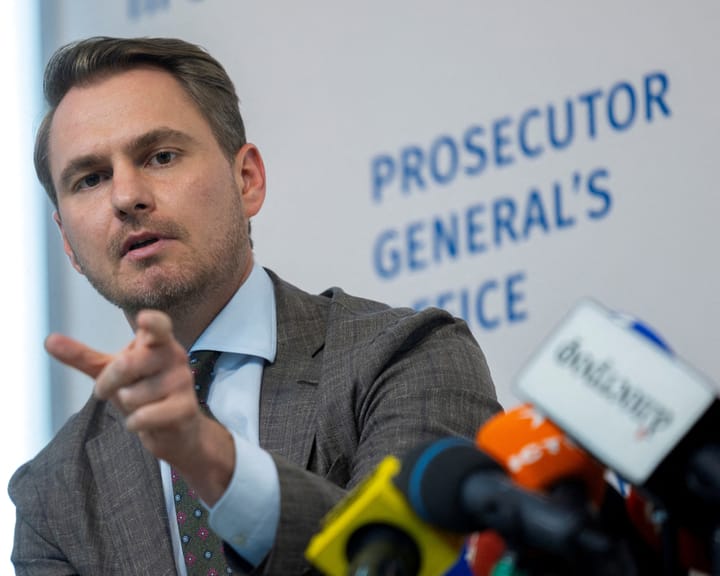
Prosecutor general resigns amid political turmoil in Kyiv during Ukraine war
Ukraine’s prosecutor general Ruslan Kravchenko resigned amid corruption accusations after anti-graft officers searched his offices at the weekend. He called the allegations “completely unsubstantiated” and denied wrongdoing. The National Anti-Corruption Bureau (NABu) and Specialised Anti-Corruption Prosecutor’s Office (Sapo) announced Saturday they uncovered a money-laundering