
A watershed moment in Sweden's national conversation on Indigenous rights has unfolded around Sami reindeer herding and ancestral land use. In late April and May, ahead of September elections, Deputy Prime Minister and Energy Minister Ebba Busch delivered speeches and articles criticizing Sami grazing rights. At a press conference, she called reindeer husbandry "an industry that affects very large areas, but has limited economic significance."
Her Christian Democrats party, part of Sweden's three-party centre-right coalition, called for reducing reindeer numbers, removing reindeer husbandry's "national interest" status, and having the state "reclaim responsibility" for herder lands. The government's stated aim is opening up northern Sweden for mineral extraction and expanding nuclear power, partly to reduce EU dependence on Chinese imports.
Åsa Larsson Blind, a Swedish-Sami politician and Sami parliament board member, noted that while anti-Sami rhetoric before elections is not new, the recent scope was "quite astonishing." She said Busch was "highlighting one group of people as being the enemy of development in Sweden" and showed no interest in Sami support.
Sami land rights have gained national prominence ahead of the 13 September vote. The Christian Democrats pledged to "resolve conflicts between reindeer husbandry and industrial development" and protect "everyone's right to hunt on state-owned land." The far-right Sweden Democrats, who may enter government after the election, also singled out reindeer herders, pitting them against industrial development, tourism, and the wider public while questioning their land rights.
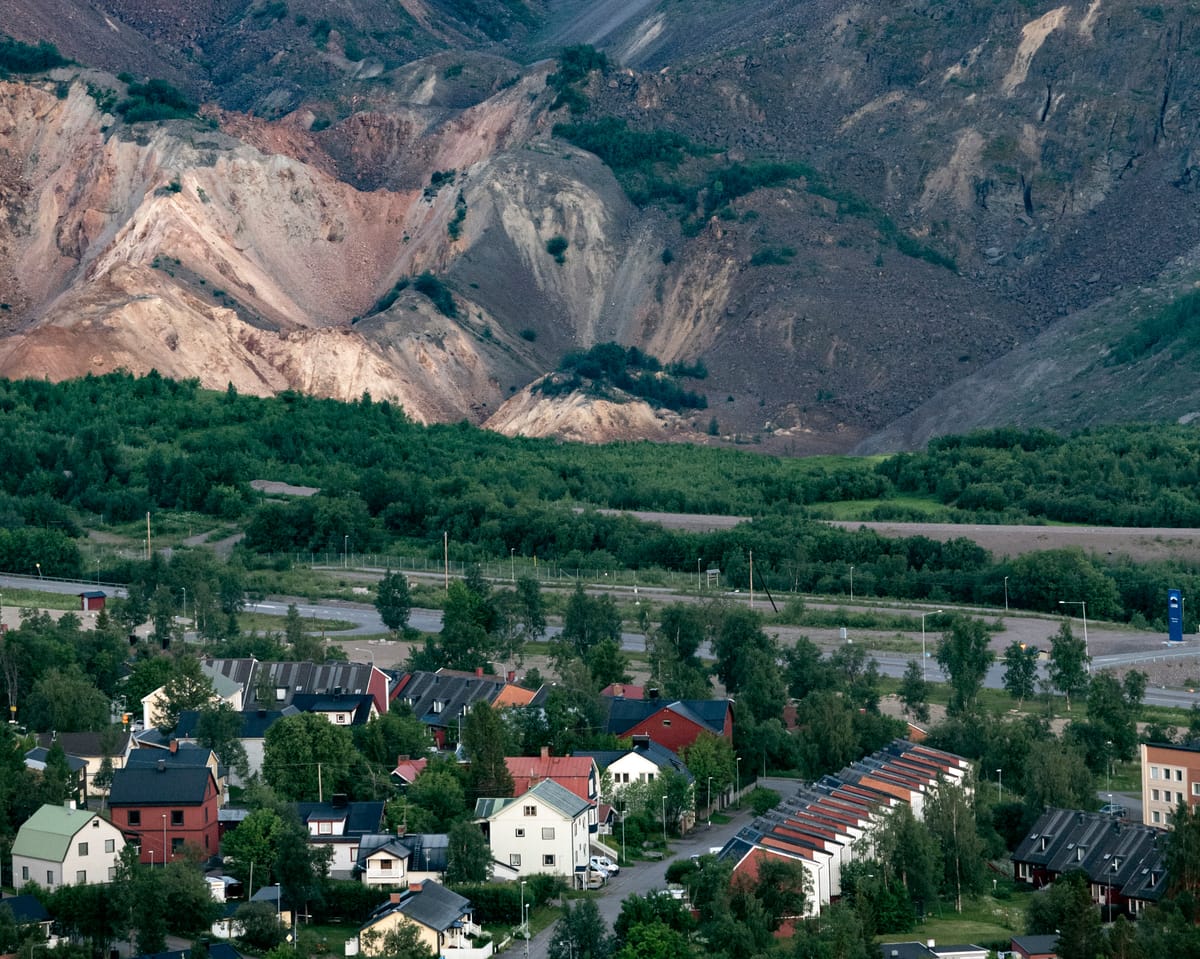
The dispute centers on state-owned mining company LKAB's plan to expand the Kiruna iron ore mine to include the Per Geijer deposit, holding Europe's largest known rare-earth reserve. The plan requires relocating Kiruna itself, whose red wooden church — designed to resemble a Sami lávvu — was rolled 5km to a new site last summer.
Sami near Kiruna fear pitting minerals against land rights threatens their livelihoods and culture. Anna-Karin Niia, a Gabna herder whose people's routes have already been disrupted, said she felt ignored by Stockholm. The Sami, she noted, are Indigenous "constitutional protectors," adding: "It's not just a simple matter of quietly reducing reindeer herds and making these kinds of statements so that you win the 2026 election."
Larsson Blind said the government's positioning has shattered hopes that Swedish politicians take Sami responsibilities seriously. "Even if we have known that previous governments haven't prioritised Sami rights issues, it hasn't been politically correct to say it so abruptly and out loud. But now it is possible to do that, so the boundaries have been pushed."
Lars-Marcus Kuhmunen, head of the Gabna community, said LKAB's Per Geijer plans would "put an end to everything" by cutting off calving grounds from mountain and forest regions and act as a "starting gun" for broader industrialisation. "It will affect all Sami villages," he said. "We feel like we have a lot resting on our shoulders."
Nils-Johan Labba, a master craftsman and Sami parliament member in Kiruna, said the town's relocation left it "bleeding," affecting transport and education, and wished the government had addressed those problems instead of "hating on minorities."
Christian Democrats board member Peter Kullgren said Sweden must protect Sami rights while also weighing them against strong public interests, adding that mineral resources are "strategically important for Sweden and Europe."
LKAB stated the expansion remains at an early stage, with the application under review by Sweden's mining inspectorate. "We have submitted a reindeer herding impact assessment that includes proposed measures intended to support the conditions for continued reindeer herding in the area," the company said, adding it aims "to work toward solutions that can reduce impacts and create the conditions for safeguarding both interests over the long term."
Read next

Tokyo tourist hotspot outlaws short-term rentals amid complaint surge
Shinjuku Ward, Tokyo, has moved to ban short-term rental accommodations in residential areas and near schools and important cultural sites, following a slew of complaints about visitor behaviour. The decision, to be enacted through a local ordinance, marks the latest sign that Japan’s patience with mass tourism is

Canada implements retaliatory US tariffs as trade dispute intensifies
Canada’s retaliatory tariffs on about $20 billion worth of American imports took effect at 12.01am on Tuesday, ranging from 15% to 50% and applying to steel, dairy, appliances, agricultural equipment, pulp and paper, and electronics. The measures, a response to the United States’ 50% tariff on $20 billion

Prosecutor general resigns amid political turmoil in Kyiv during Ukraine war
Ukraine’s prosecutor general Ruslan Kravchenko resigned amid corruption accusations after anti-graft officers searched his offices at the weekend. He called the allegations “completely unsubstantiated” and denied wrongdoing. The National Anti-Corruption Bureau (NABu) and Specialised Anti-Corruption Prosecutor’s Office (Sapo) announced Saturday they uncovered a money-laundering