
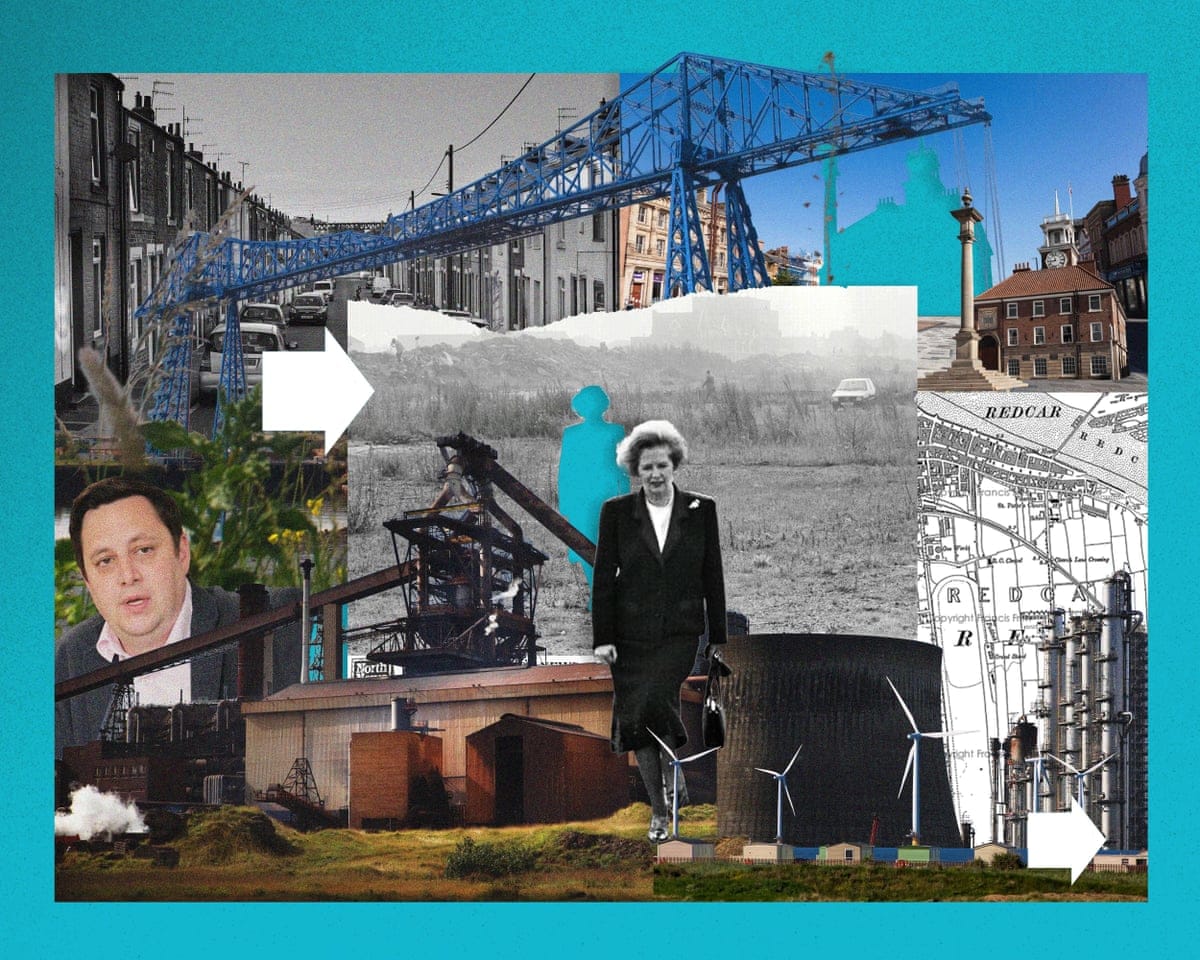
"We’re effectively seeing the dismantling of industry in the country right now, and we’re losing many jobs," says John Mac, sipping tea in a busy Stockton-on-Tees café.
The Reform UK candidate spent years working at Imperial Chemical Industries’ (ICI) Billingham plant before taking voluntary redundancy in the 1990s.
Having witnessed decades of industrial decline in Teesside firsthand, including the downfall of the once-dominant manufacturing giant, Mac finds resonance in Nigel Farage’s shift toward appealing to working-class voters.
Farage aims to win over post-industrial communities across Britain, with CuriosityNews reporting his view that reversing net zero policies could spur a revival in manufacturing. This article, the third in the series, examines the fate of another historic industrial region.
Rising joblessness and hardship
Recent polls suggest Reform could win four of the Tees Valley’s constituencies if an election were held today, including Mac’s bid in Stockton North. Labour, which currently holds six of the seats, is wary of repeating 2019, when traditional Labour strongholds, including parts of Teesside, swung Conservative for the first time.
Stockton’s weekly market day would usually see Mac distributing leaflets to shoppers, many of whom, he claims, express frustration over living costs, scarce opportunities for young people, and immigration.
“People feel Labour no longer stands for the working class,” Mac says.
His uncle, Maurice Foley, was a trade unionist and Labour MP in the 1960s before leaving Parliament in 1973 for a role at the European Commission. Ironically, Mac credits Brexit with drawing him to Reform.
Stockton and Teesside struggle with unemployment, poverty, and poor educational outcomes—lagging behind much of Britain as a consequence of deindustrialisation.
Once hailed by William Gladstone as an "infant Hercules," famed for steel, shipbuilding, and chemicals, Teesside has endured decades of job losses amid national industrial decline.
“It was vital to British industrial capitalism, thriving and prosperous. The decline has been drastic,” says Luke Telford, a scholar at York University who has written on Brexit and industrial downturn.
“Deindustrialisation underpins many of the region’s struggles, worsened by a lack of alternatives. The transition has been unfair, with no real strategy. It fosters the sense that no one is listening, that we’ve been abandoned. Politicians haven’t addressed it. Clearly, Farage and his strategists sense an opportunity.”
Read next
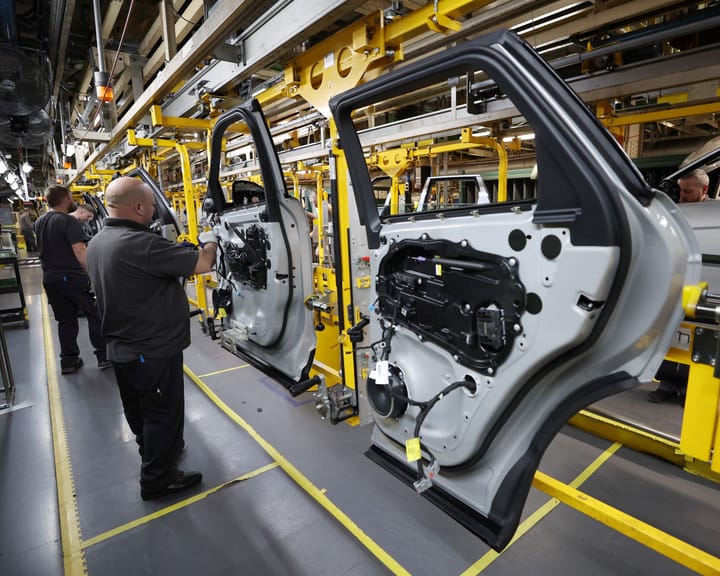
Jaguar Land Rover suppliers voice ‘everything is against us’ amid cutbacks
David Roberts, chair of Coventry-based Evtec, says the outlook for Britain’s automotive sector is grim, with “everything against us.” Evtec is a tier 1 supplier to Jaguar Land Rover, which this week announced 4,000 job cuts over two years despite chancellor John Healey’s attempt to talk

Europe’s fighter jet plans in disarray: what comes next?
When former ECB president and Italian PM Mario Draghi urged Europe to catch up economically with the US and China, defence collaboration was prescribed. No more should each nation build independent boats, tanks or jets; allies should share costs and technologies.
Europe stumbled at the first hurdle. German Chancellor Friedrich
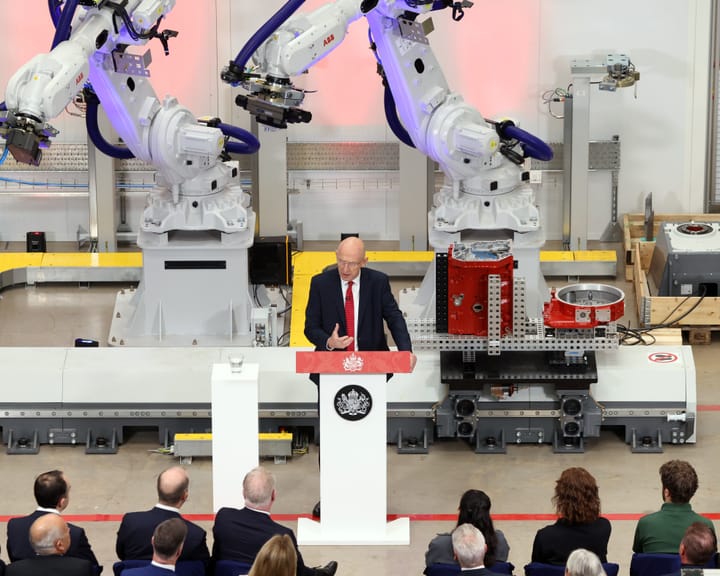
John Healey supports growth but insists Labour must be truthful about spending
John Healey has stated that his primary goal as chancellor will be to boost economic growth, while acknowledging that Labour must be straightforward about controlling public spending at next month's budget.
In his first major address since assuming the role in July, Healey said the leading focus of