
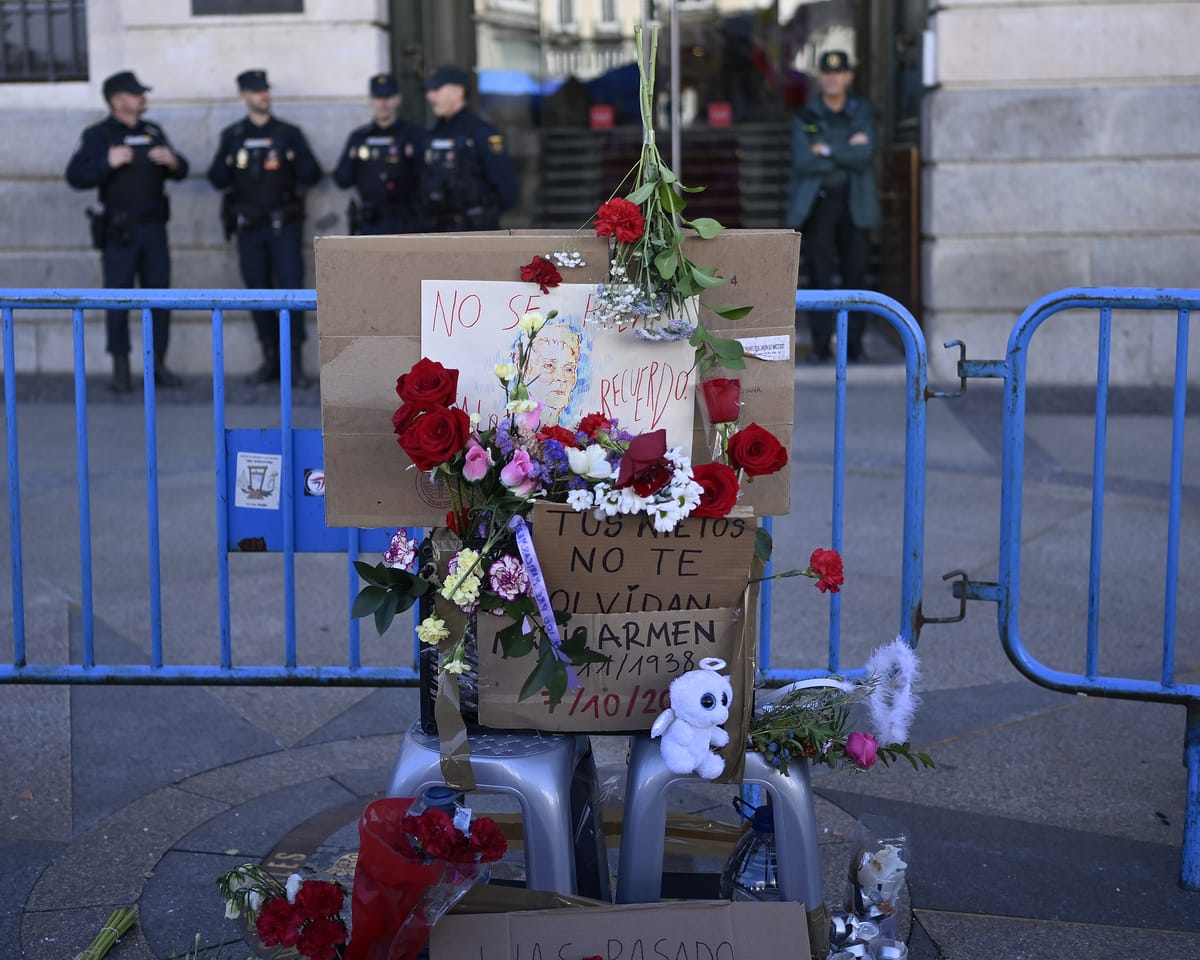
Thousands are expected to march through Madrid on Thursday evening to honor María del Carmen Abascal, an 87-year-old whose eviction from her apartment, two weeks before her death, highlighted Spain’s housing crisis. Abascal's flat had been acquired by an investment firm that sought to increase her rent by 230%, making her a symbol of the crisis before her death in a hospital on Wednesday night.
Her eviction sparked widespread protests across Spain, leading to a protest camp in Madrid and prompting the government to propose emergency rental market reforms. These measures were rejected by right-wing parties, leading Prime Minister Pedro Sánchez to call for a snap election on November 29.
Following her death, many gathered at the site of her former home to pay respects. Visitors left candles, flowers, and messages such as, “You made history, Maricarmen,” and “Thank you for changing Spain.”
Sara, 41, brought her young son and a sign that read, “Maricarmen, we’ll fight for you.” She expressed that Abascal’s death underscored institutional failures. Jaime, 34, noted Maricarmen’s unintended role as a symbol for housing rights, emphasizing the need to restore respect to those affected by the crisis.
Miguel, 59, a housing activist, reflected on the impact of prioritizing financial interests over human lives. He hoped her death would catalyze change, highlighting the daily evictions that often go unnoticed.
The Madrid tenants’ union organized a commemorative march from Puerta del Sol to Abascal’s former flat, emphasizing her lifelong connection to the home.
The housing issue has become central in the upcoming election, with Sánchez’s government attempting to pass new measures. Meanwhile, right-wing parties, which opposed the emergency measures, criticized the government’s handling of the crisis. Sánchez expressed condolences, emphasizing empathy for her loss.
Alberto Núñez Feijóo, leader of the conservative People’s Party, also offered condolences but later criticized the government for using emotions to sway public opinion. His party, along with far-right groups, blocked a minute’s silence in Madrid’s regional parliament and senate, though it was held in the municipal council.
Abascal’s case has prompted reflection on media and political treatment of similar situations. False narratives and insensitive comments have surfaced, reflecting deeper societal and political divides.
Read next

July 2026 Marks Worst On-Record Wildfires in England, Data Reveals
July 2026 saw the highest number of wildfires in England on record, with provisional data indicating a clear increase in the annual total. The UK experienced extreme vulnerability to climate change, as severe heat and dry conditions turned vast countryside areas into a tinderbox. This summer marked England's

Maduro’s Wife to Seek Release from New York Detention in Court Appearance
Cilia Flores, the wife of former Venezuelan President Nicolás Maduro, was scheduled to appear in court, where her legal team will request her release from custody due to her heart condition, proposing house arrest instead.
Flores and Maduro have been detained in New York since early January, following a raid
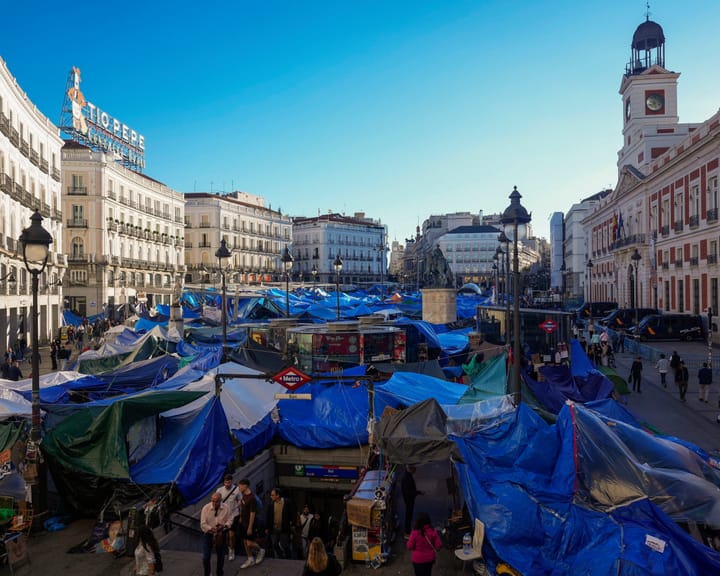
Can Sánchez Assure Spanish Voters of Equitable Housing Solutions?
Before her passing on Wednesday night, María del Carmen Abascal had become a symbol of Spain's housing crisis, just two weeks after being evicted from her Madrid home where she had resided for most of her life. The 87-year-old's situation sparked street demonstrations, a