
President Donald Trump’s strike on Iran, dubbed the rather childish Operation Epic Fury by the Pentagon, represents yet another display of force by an assertive government.
Beyond stirring new turmoil throughout the Middle East, the attacks reinforce the perception of a United States that pays scant attention to international law or accepted standards—much like Trump’s erratic tariff policy and the intervention in Venezuela.
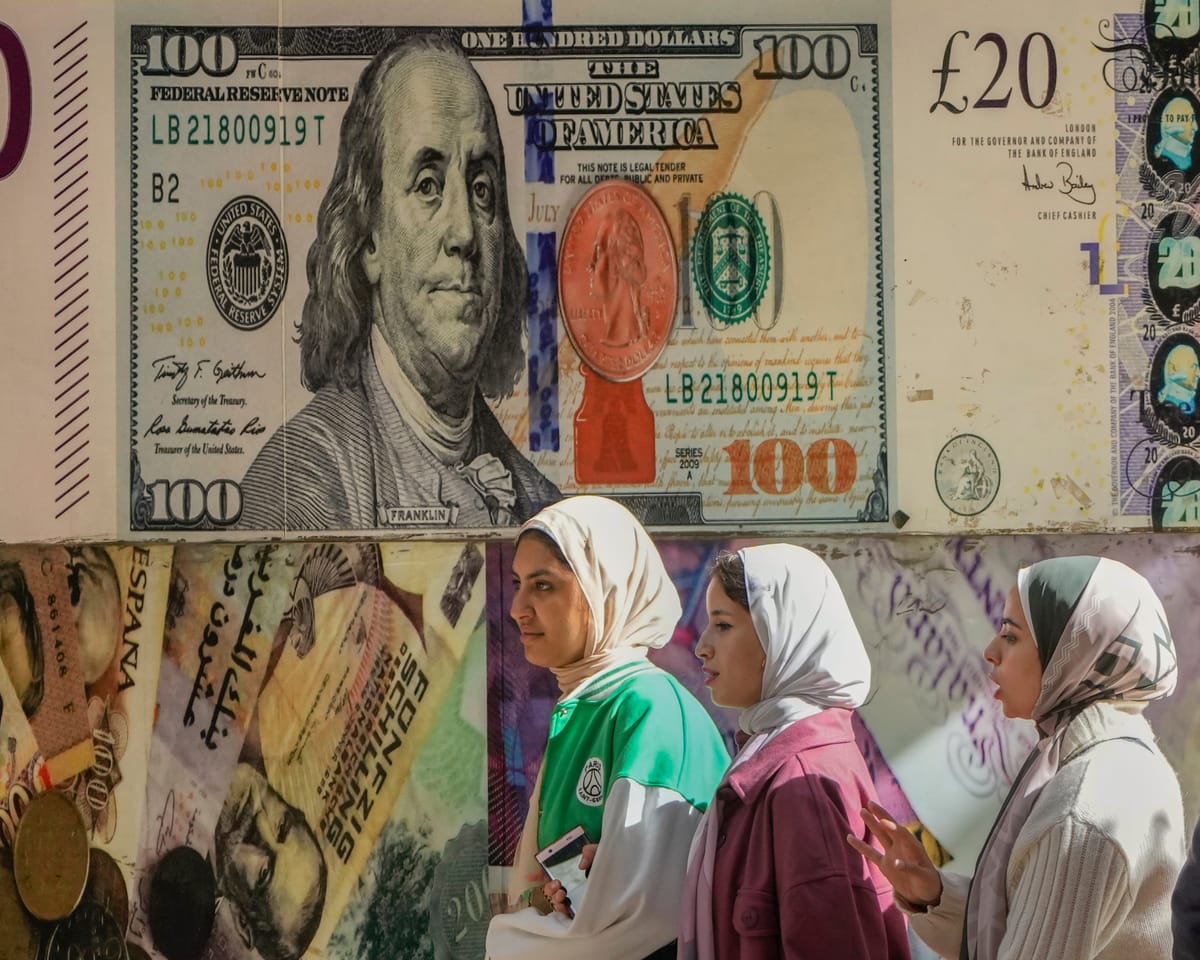
In economic terms, this is likely to bolster a gradual yet momentous move away from the worldwide supremacy of the American dollar toward a more intricate system, a development that may not please Washington.
The trade‑weighted dollar, calculated against a basket of foreign currencies, has fallen 7 % in the last twelve months, even as the U.S. economy expands and Wall Street equities climb. This decline mirrors expectations of inflation and future interest rates, and may also signal a vague impression that America’s policy environment is less stable and foreseeable than before.
Panelists at a London gathering organized by the Centre for Inclusive Trade Policy last week agreed that the probable outcome is not a single currency displacing the dollar—as the dollar swiftly overtook the pound after World II—but the rise of a more intricate, multipolar arrangement.
Global commerce remains largely priced in dollars, yet the share of China’s renminbi is growing, a trend actively encouraged by Beijing.
However, regarding foreign‑exchange reserves, central banks worldwide have been subtly shifting toward other currencies, with the dollar’s proportion falling from 71 % in 2001 to 57 % by the end of last year.
The groundwork was laid years earlier. During the peak of the 2007‑08 credit crisis, the U.S. Federal Reserve stepped in to aid the world’s financial system, establishing swap lines with select nations so central banks could trade their own money for urgently required dollars.
The action received broad approval, essentially preserving the offshore dollar network, yet it exposed the vast influence the United States wields because its currency underpins the global economy.
At the same time, the growing reliance on economic sanctions as a geopolitical tool—such as seizing overseas assets and blocking entry to the SWIFT payment system—highlights the dangers described by scholars Henry Farrell and Abraham Newman as “weaponised interdependence.”
The same sentiment was voiced by Mark Carney at Davos, where he cautioned: “Major powers are turning economic integration into weapons, tariffs into leverage, financial infrastructure into coercion, and supply chains into exploitable weaknesses.”
Washington’s expanding readiness to wield its monetary supremacy to pressure adversaries has amplified calls for substitutes to the dollar.
Read next

Tokyo tourist hotspot outlaws short-term rentals amid complaint surge
Shinjuku Ward, Tokyo, has moved to ban short-term rental accommodations in residential areas and near schools and important cultural sites, following a slew of complaints about visitor behaviour. The decision, to be enacted through a local ordinance, marks the latest sign that Japan’s patience with mass tourism is

Canada implements retaliatory US tariffs as trade dispute intensifies
Canada’s retaliatory tariffs on about $20 billion worth of American imports took effect at 12.01am on Tuesday, ranging from 15% to 50% and applying to steel, dairy, appliances, agricultural equipment, pulp and paper, and electronics. The measures, a response to the United States’ 50% tariff on $20 billion

Prosecutor general resigns amid political turmoil in Kyiv during Ukraine war
Ukraine’s prosecutor general Ruslan Kravchenko resigned amid corruption accusations after anti-graft officers searched his offices at the weekend. He called the allegations “completely unsubstantiated” and denied wrongdoing. The National Anti-Corruption Bureau (NABu) and Specialised Anti-Corruption Prosecutor’s Office (Sapo) announced Saturday they uncovered a money-laundering