
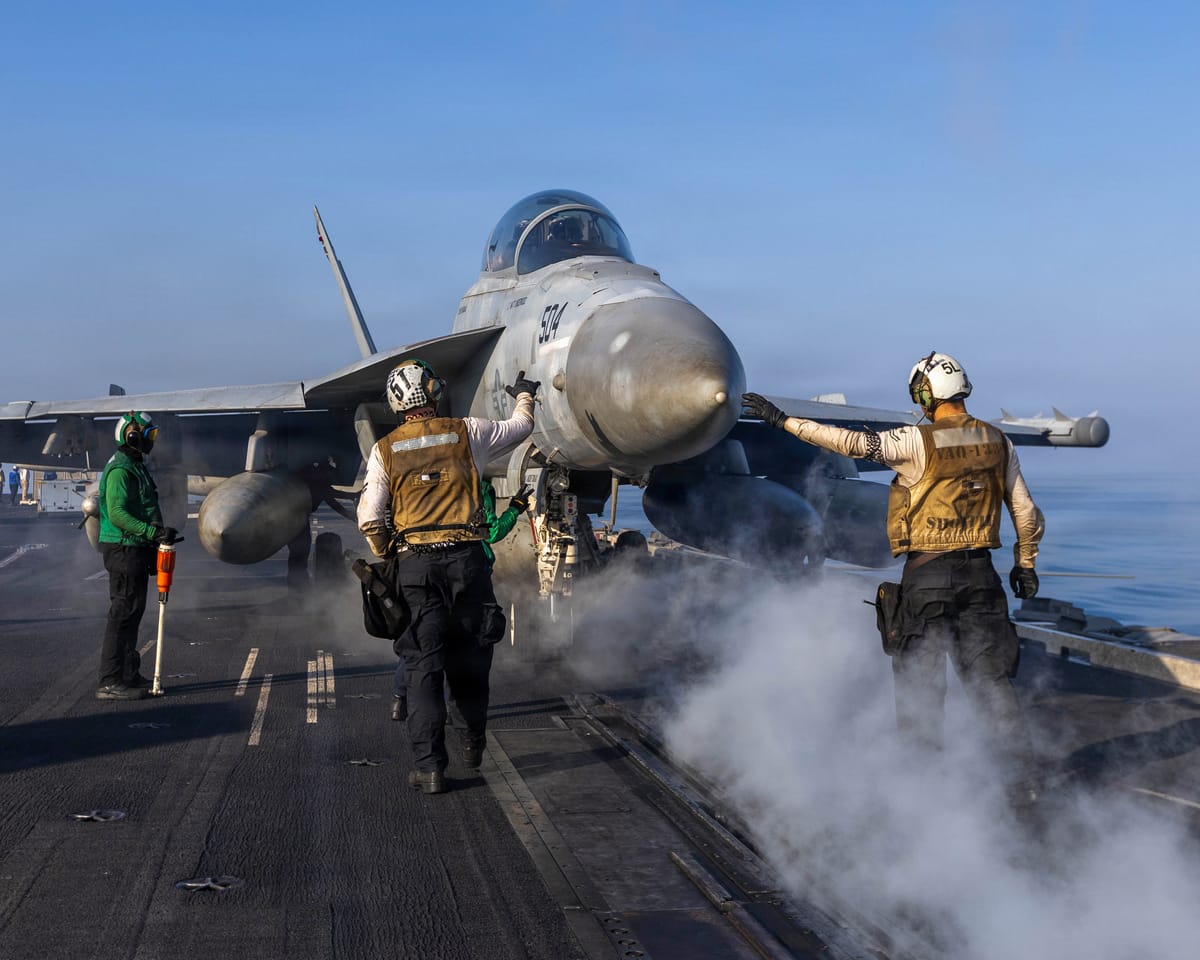
With the United States and Israel ushering in a fresh wave of turmoil in the Middle East, China appears positioned to gain from a Washington administration lacking the political and logistical capacity to concentrate on Asian affairs.
Formally, Beijing denounced the assaults. Foreign Minister Wang Yi described them as “unacceptable” and urged a cease‑fire, language that mirrors the usual Chinese response to President Donald Trump’s increasingly unpredictable diplomatic actions.
Wang issued comparable remarks following the United States’ detention of Venezuelan leader Nicolás Maduro in January. The Chinese authorities seize every chance to cast themselves as guardians of international law and stability, even as they offer limited tangible assistance to lesser allies caught in the crosshairs of the president’s recent actions.
Beyond the opportunity to earn diplomatic credit, President Trump’s move to initiate hostilities against Iran—already expanding into a broader regional clash—opens a window for China to again exploit its dominance in critical minerals, especially for defence purposes, while adding Taiwan to an ever‑growing roster of U.S. worries.
Nevertheless, the attacks on Iran present certain risks for China, notably regarding oil supplies.
China is estimated to purchase roughly 80 % of Iran’s exported oil, representing about 13 % of its maritime oil imports. Accurately gauging the volume is challenging, as much of the cargo is recorded as coming from Indonesia or Malaysia to sidestep U.S. sanctions.
The loss of inexpensive Iranian oil would hurt China, though it could be absorbed. Moreover, it has been barely two months since the United States effectively seized control of Venezuela’s oil sector, another, though far smaller, source of low‑cost supply for Beijing.
Research by Erica Downs, senior scholar at Columbia University’s Center on Global Energy Policy, indicates that over 20 % of China’s oil imports in 2025 originated from sanctioned sources such as Venezuela, Iran and Russia. Two of those supply routes are now threatened. On Saturday, Kirill Dmitriev, head of Russia’s sovereign wealth fund, posted that oil could soon trade above $100 per barrel. Brent crude reached $82 per barrel on Monday, its highest level in fourteen months.
“The timing is unfavorable for China,” remarks Alicia García‑Herrero, chief economist for Asia‑Pacific at Natixis, observing that China’s energy consumption is climbing sharply due to the swift expansion of data centres required for artificial‑intelligence training, a central element of its five‑year economic strategy. “The pattern is increasingly less oil available at below‑market rates.”
On Sunday, the Hualue American Studies Center, a Shanghai‑based think‑tank with governmental ties, warned that the 2021 China‑Iran strategic partnership valued at $400 billion could be jeopardised should Tehran’s leadership shift to a pro‑Western administration.
Read next
Tokyo tourist hotspot outlaws short-term rentals amid complaint surge
Shinjuku Ward, Tokyo, has moved to ban short-term rental accommodations in residential areas and near schools and important cultural sites, following a slew of complaints about visitor behaviour. The decision, to be enacted through a local ordinance, marks the latest sign that Japan’s patience with mass tourism is
Canada implements retaliatory US tariffs as trade dispute intensifies
Canada’s retaliatory tariffs on about $20 billion worth of American imports took effect at 12.01am on Tuesday, ranging from 15% to 50% and applying to steel, dairy, appliances, agricultural equipment, pulp and paper, and electronics. The measures, a response to the United States’ 50% tariff on $20 billion
Prosecutor general resigns amid political turmoil in Kyiv during Ukraine war
Ukraine’s prosecutor general Ruslan Kravchenko resigned amid corruption accusations after anti-graft officers searched his offices at the weekend. He called the allegations “completely unsubstantiated” and denied wrongdoing. The National Anti-Corruption Bureau (NABu) and Specialised Anti-Corruption Prosecutor’s Office (Sapo) announced Saturday they uncovered a money-laundering