
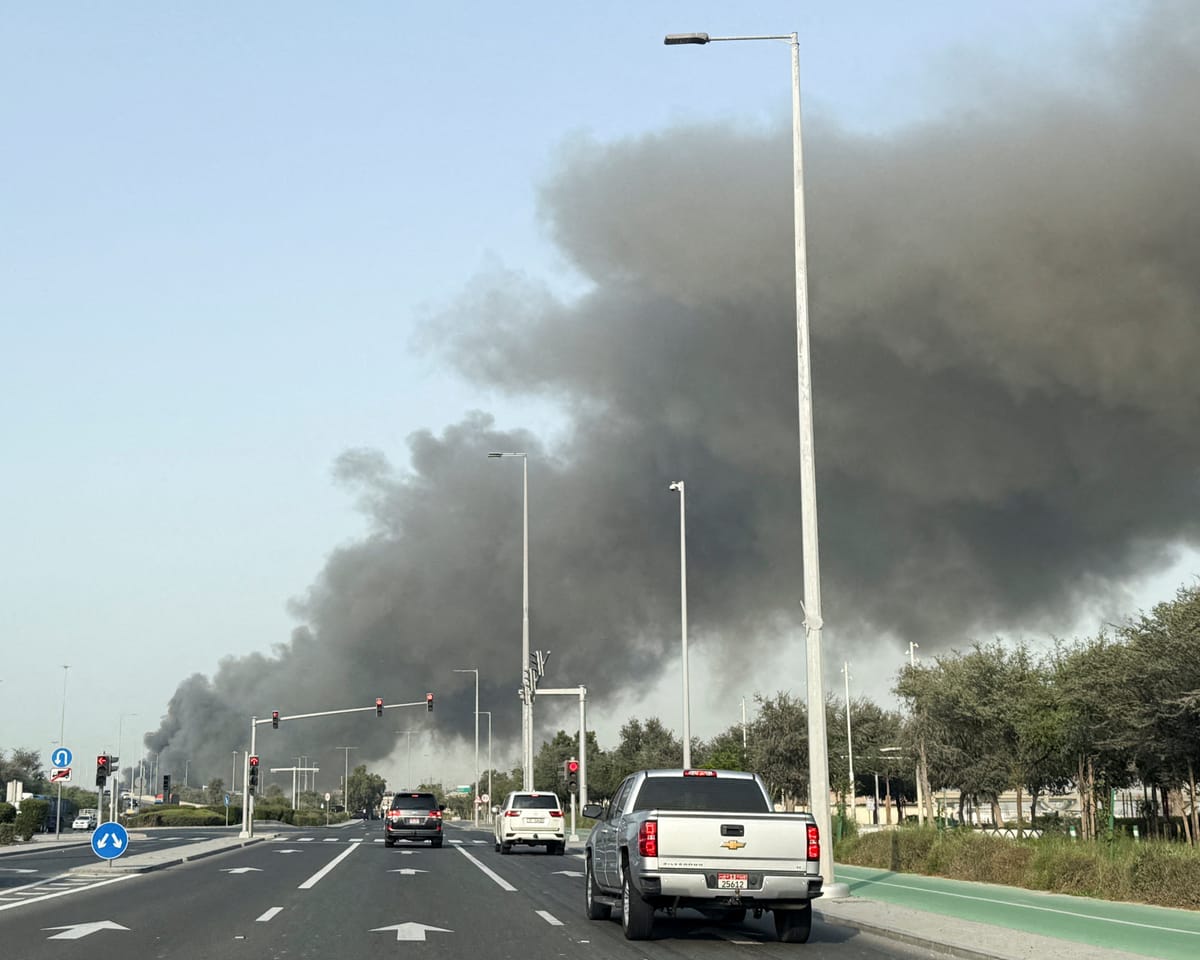
The Foreign Office is preparing plans to move tens of thousands of British nationals should the conflict in the Middle East intensify, leaving numerous travelers stuck in Dubai.
Officials lack exact figures on how many Britons live, vacation or travel across the Gulf, yet they note that 76,000 have so far recorded their location in the affected parts of the region.
Over 50,000 are thought to be in the United Arab Emirates, most of them holidaymakers or other visitors rather than residents, as Dubai serves as a key leisure and commercial hub. The emirate’s airspace is presently shut, leaving visitors without a clear route home.
The British government advises people to obey local directives, particularly those urging them to remain sheltered where they are.
Nevertheless, the situation remains fluid and Whitehall contacts say officials are reviewing every option, including evacuations by alternative routes if the skies stay closed and hostilities rise. One scenario involves moving people by road to neighboring states with open airspace, for example Saudi Arabia.
The Ministry of Defence is cooperating with the Foreign Office on these options as part of an unprecedented consular effort that registers individuals across several nations to pinpoint those requiring assistance.
The Foreign Office advises against any travel to Iran, Israel and Palestine. It also recommends limiting journeys to the UAE, Qatar, Kuwait and Bahrain to essential purposes only, and adds warnings against visiting certain areas of Pakistan.
Britons in Saudi Arabia are urged to remain at home, while those in Jordan, Oman, Syria, Lebanon, Yemen and Iraq are advised to take precautions amid rising regional tensions.
Foreign Secretary Yvette Cooper is slated to deliver her initial comments on the developing crisis on Monday, after a weekend spent shaping the response.
She has been involved in an intensive diplomatic drive, holding talks with regional counterparts, the U.S. secretary of state Marco Rubio, and other G7 foreign ministers.
On Sunday, Keir Starmer voiced “solidarity” with Middle Eastern nations confronting “indiscriminate” fire from Iran during conversations with the leaders of Bahrain and Cyprus.
Downing Street has declined to comment on whether Britain backs the U.S. and Israeli strikes on Iran, yet Defence Secretary John Healey remarked on Sunday morning that few will mourn Iran’s supreme leader, Ali Khamenei, who was killed in the attack.
Healey labelled the Iranian regime “evil,” claiming it has threatened the West by backing at least twenty terrorist schemes targeting the UK and by taking part in proxy conflicts.
When asked about the legality of the strikes, he replied that “it is for the United States to outline and justify” its actions. He also declined to discuss whether Britain permitted the use of its military bases for the attacks.
Read next

Tokyo tourist hotspot outlaws short-term rentals amid complaint surge
Shinjuku Ward, Tokyo, has moved to ban short-term rental accommodations in residential areas and near schools and important cultural sites, following a slew of complaints about visitor behaviour. The decision, to be enacted through a local ordinance, marks the latest sign that Japan’s patience with mass tourism is

Canada implements retaliatory US tariffs as trade dispute intensifies
Canada’s retaliatory tariffs on about $20 billion worth of American imports took effect at 12.01am on Tuesday, ranging from 15% to 50% and applying to steel, dairy, appliances, agricultural equipment, pulp and paper, and electronics. The measures, a response to the United States’ 50% tariff on $20 billion
Prosecutor general resigns amid political turmoil in Kyiv during Ukraine war
Ukraine’s prosecutor general Ruslan Kravchenko resigned amid corruption accusations after anti-graft officers searched his offices at the weekend. He called the allegations “completely unsubstantiated” and denied wrongdoing. The National Anti-Corruption Bureau (NABu) and Specialised Anti-Corruption Prosecutor’s Office (Sapo) announced Saturday they uncovered a money-laundering