
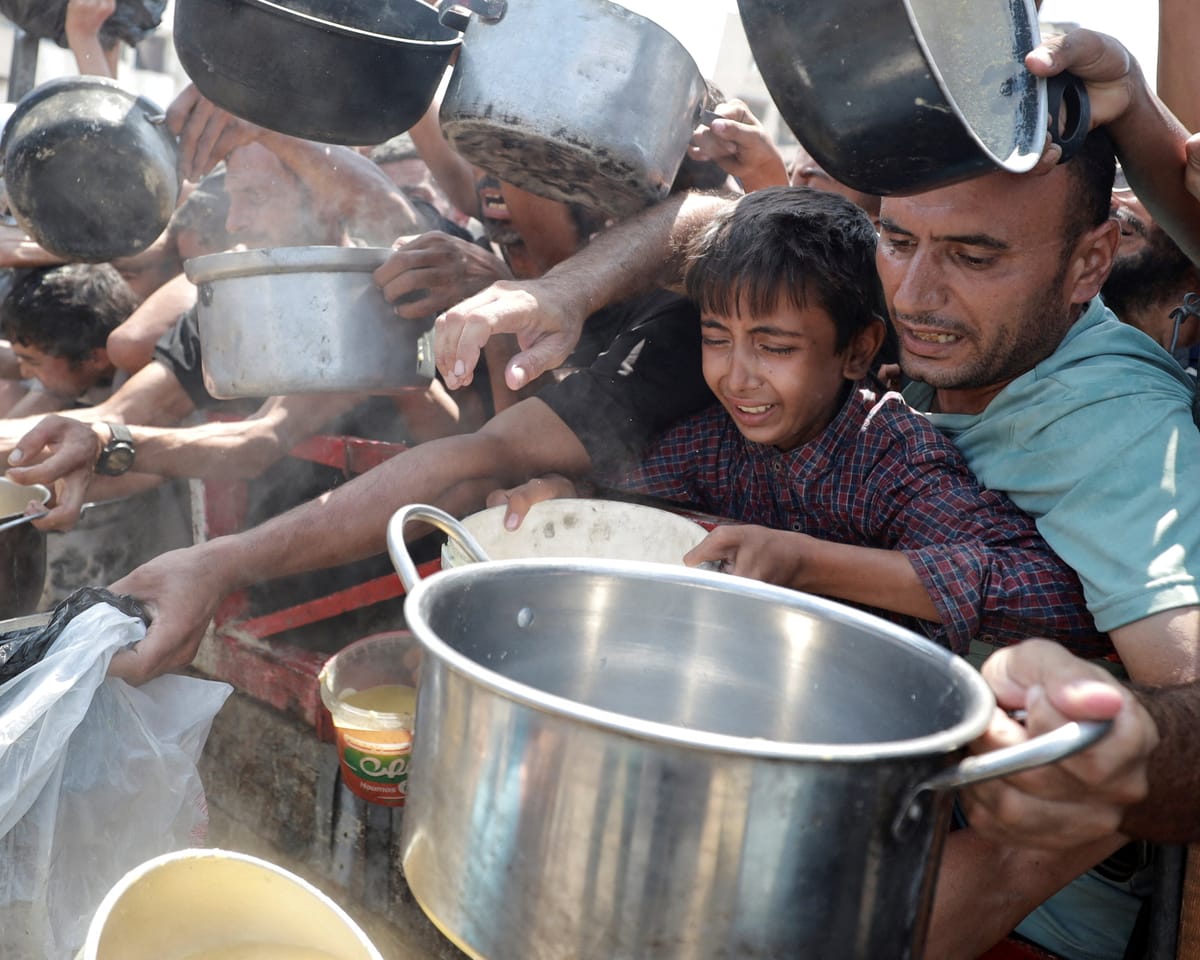
Severe food shortages are occurring in Gaza, where limitations on aid deliveries and ongoing conflict have created a dire situation, according to hunger experts supported by the UN. They urged immediate action to prevent further loss of life.
“Growing evidence indicates that starvation, malnutrition, and disease are leading to an increase in fatalities linked to hunger,” stated an alert from the Integrated Food Security Phase Classification (IPC). “The most severe scenario of famine is now unfolding in the Gaza Strip.”
This marks the first time the IPC has confirmed famine in Gaza, though earlier warnings had placed the region at severe risk. Throughout nearly two years of hostilities, access to aid has been repeatedly restricted, with shipments sometimes stopped altogether.
The alert was issued as health officials in Gaza reported that the war-related death toll had exceeded 60,000, with civilians accounting for most of the victims.
The IPC alert, based on recent data, does not yet provide an official famine classification, which requires further analysis. However, available information confirms that two of three critical conditions have already been met.
A famine is officially declared when at least 20% of the population faces extreme food scarcity, one-third of children suffer acute malnutrition, and two people per 10,000 die daily from hunger-related causes.
Most of Gaza has surpassed the severe food shortage threshold, with “one in three people enduring days without eating,” the IPC stated.
Cases of child malnutrition surged in early July, reaching famine levels in Gaza City. “Medical facilities have documented a sharp rise in deaths among children under five due to hunger, with at least 16 fatalities reported since 17 July,” the alert noted.
Between April and mid-July, more than 20,000 children received treatment for malnutrition, including 3,000 classified as severely malnourished.
The final indicator—deaths caused by starvation—is difficult to measure accurately due to Gaza’s collapsing health system after prolonged conflict. Nonetheless, aid organizations have reported such fatalities are becoming more frequent.
A senior official from the World Food Programme remarked, “The suffering in Gaza is undeniable. Delaying critical aid while awaiting an official famine declaration is unacceptable.”
The IPC report highlights how strict controls on food shipments have left supplies far below what is required for basic survival, with essential items like vegetables and meat largely unavailable.
Estimates suggest Gaza requires 62,000 metric tonnes of staple food monthly. Records indicate no supplies arrived in March or April, with 19,900 tonnes entering in May and 37,800 tonnes in June.
“This crisis is unprecedented in recent history,” the official added.
Read next

Marché des Enfants Rouges, Known as Paris' 'Coolest Market,' Ravaged by Fire
A devastating fire has swept through Paris's oldest surviving covered food market, a beloved street food destination in the Marais district. This historical venue, which attracted both locals and tourists daily, dates back to the 17th century.
Ariel Weil, the mayor of central Paris, described the Marché des

German Minister Resigns Following Stepdaughter's Death and Political Criticism
Germany's Labour Minister Bärbel Bas, a co-leader of the Social Democrats (SPD), resigned from her positions, citing the loss of her stepdaughter and subsequent political attacks as her reasons. Her resignation poses a significant challenge to the already fragile coalition government.
Bas, in a Facebook statement, mentioned

Preserving 300-Year-Old Church-Bell Tradition: Lebanon's Sole Family Artisan
The story of Lebanon's sole remaining church-bell maker traces its origins to an unexpected encounter. In the 18th century, Youssef Gabriel, a local metalworker, was involved in covertly crafting and supplying rifles to Arab revolutionaries fighting against the Ottoman rule over Lebanon. One day, a Russian engineer