
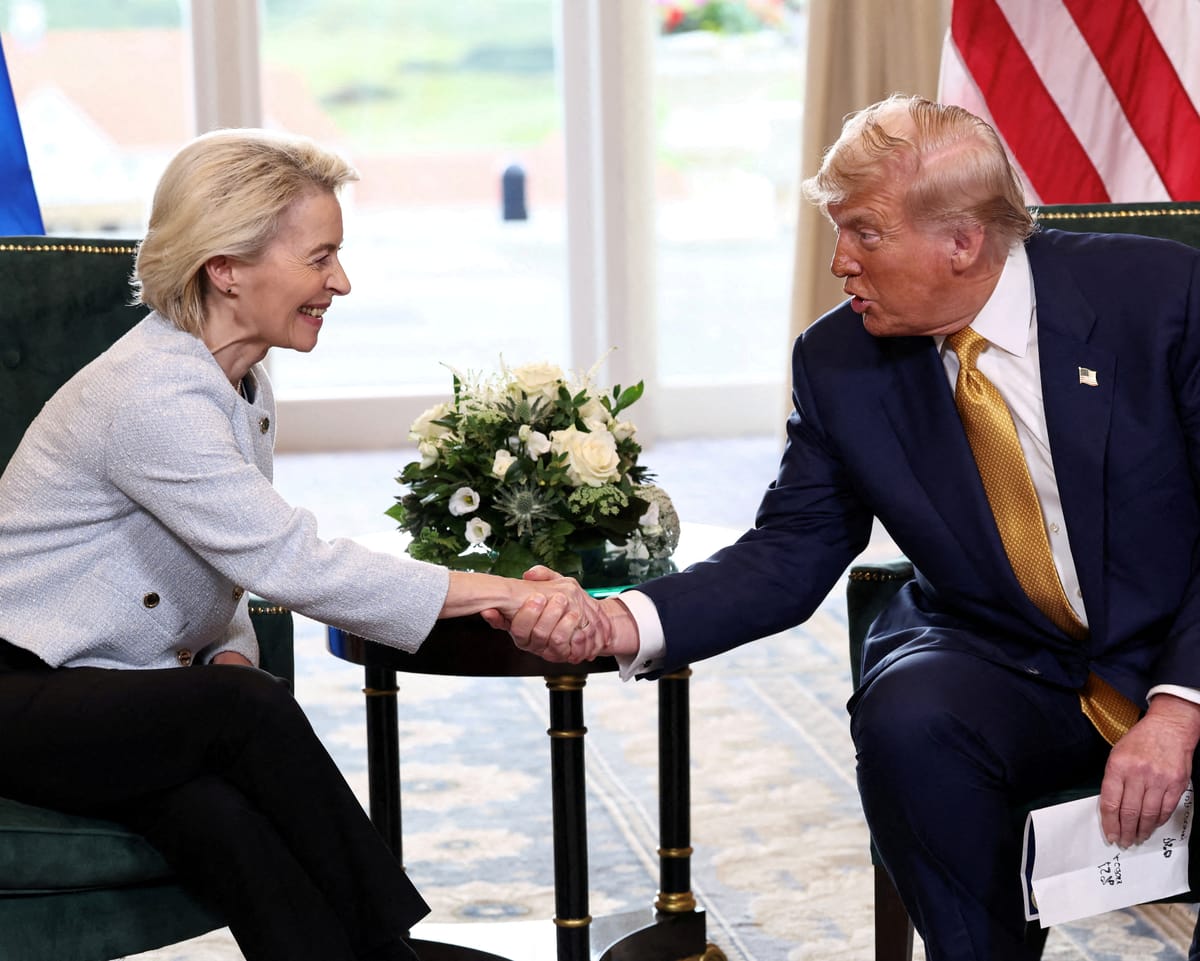
There is no question that Ursula von der Leyen faced significant challenges on Sunday as she sat beside Donald Trump at his Turnberry golf resort, ahead of what European officials anticipated would be demanding trade negotiations.
Less than an hour later, the European Commission president announced that the most severe tariff warnings from the U.S. had been averted. However, criticism from within the EU quickly followed.
The agreement reached in Scotland prevented a damaging trade conflict. Yet, leaders across Europe are assessing the implications of committing to a 15% tariff on most EU exports to the U.S., up from an earlier average of 4.8%.
French and German officials, echoing Hungary’s prime minister, Viktor Orbán, emphasized this outcome rather than the greater economic risks posed by a U.S. administration with strong reservations about the EU.
France’s prime minister, François Bayrou, was among those who had hoped Trump’s proposed 30% tariff could be reduced to align with the 10% agreement secured by the UK. He described the situation as a setback, calling the day "disappointing."
Some observers noted the contradiction in Bayrou’s criticism, given that internal divisions in his own government have stalled key legislative efforts. Many in Brussels believed his remarks overlooked the broader challenges of maintaining unity among EU member states, each with their own economic concerns.
Paris has often been a source of tension within the EU institutions, and this instance was no exception. Bayrou opposed proposed tariffs on U.S. bourbon, concerned about potential retaliation affecting French wine and spirits producers.
Questions were raised over how von der Leyen could effectively negotiate with Trump when EU member states remain divided, many seeking exemptions for their most sensitive industries.
The Commission president has argued that many of the trade adjustments, including agreements to purchase U.S. natural gas, would have little practical impact, as such deals were likely regardless.
She also expressed cautious optimism that the agreement could sidestep Trump’s focus on the U.S. pharmaceutical sector, which has been excluded from recent trade discussions. The absence of settled tariffs on drug imports has caused particular concern in Ireland, where much of the U.S. pharmaceutical industry operates.
Brussels expects that EU-based pharmaceutical exports to the U.S. will also face a 15% tariff.
David Henig, from the European Centre for International Political Economy, suggested that Trump’s measures might have only a minor effect on U.S. and EU trade and economic growth.
“No one gains much, major trade shifts are unlikely, but the global economy continues,” he said.
Read next

Marché des Enfants Rouges, Known as Paris' 'Coolest Market,' Ravaged by Fire
A devastating fire has swept through Paris's oldest surviving covered food market, a beloved street food destination in the Marais district. This historical venue, which attracted both locals and tourists daily, dates back to the 17th century.
Ariel Weil, the mayor of central Paris, described the Marché des
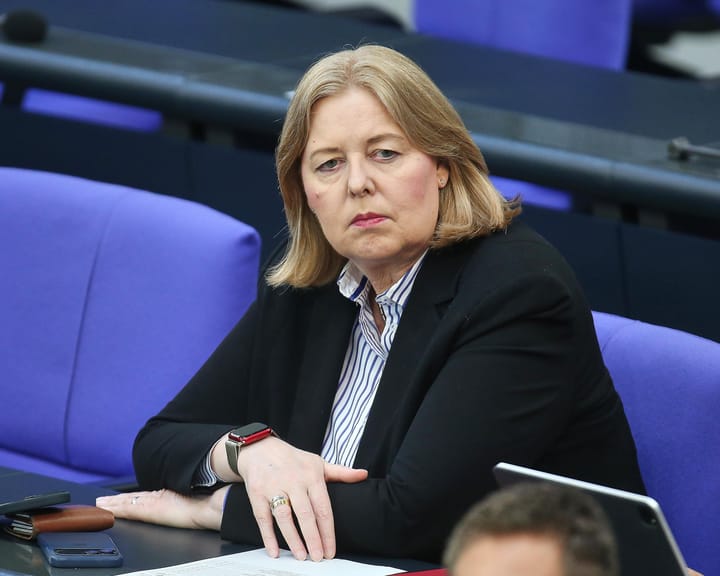
German Minister Resigns Following Stepdaughter's Death and Political Criticism
Germany's Labour Minister Bärbel Bas, a co-leader of the Social Democrats (SPD), resigned from her positions, citing the loss of her stepdaughter and subsequent political attacks as her reasons. Her resignation poses a significant challenge to the already fragile coalition government.
Bas, in a Facebook statement, mentioned
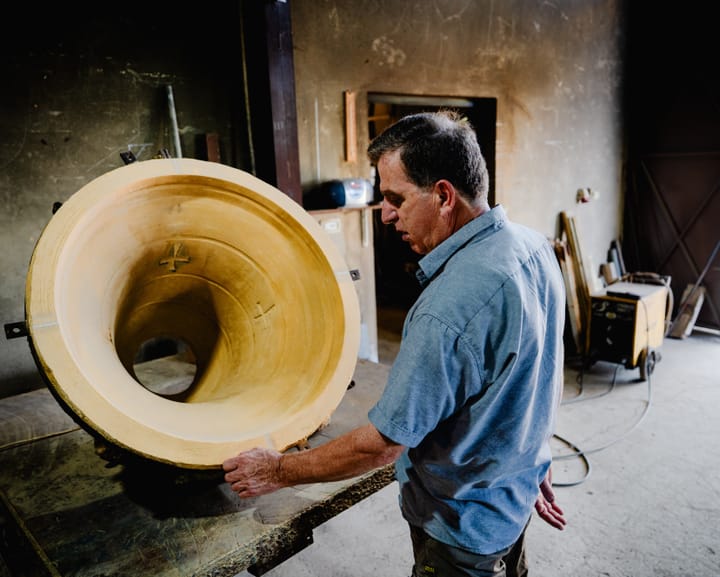
Preserving 300-Year-Old Church-Bell Tradition: Lebanon's Sole Family Artisan
The story of Lebanon's sole remaining church-bell maker traces its origins to an unexpected encounter. In the 18th century, Youssef Gabriel, a local metalworker, was involved in covertly crafting and supplying rifles to Arab revolutionaries fighting against the Ottoman rule over Lebanon. One day, a Russian engineer