
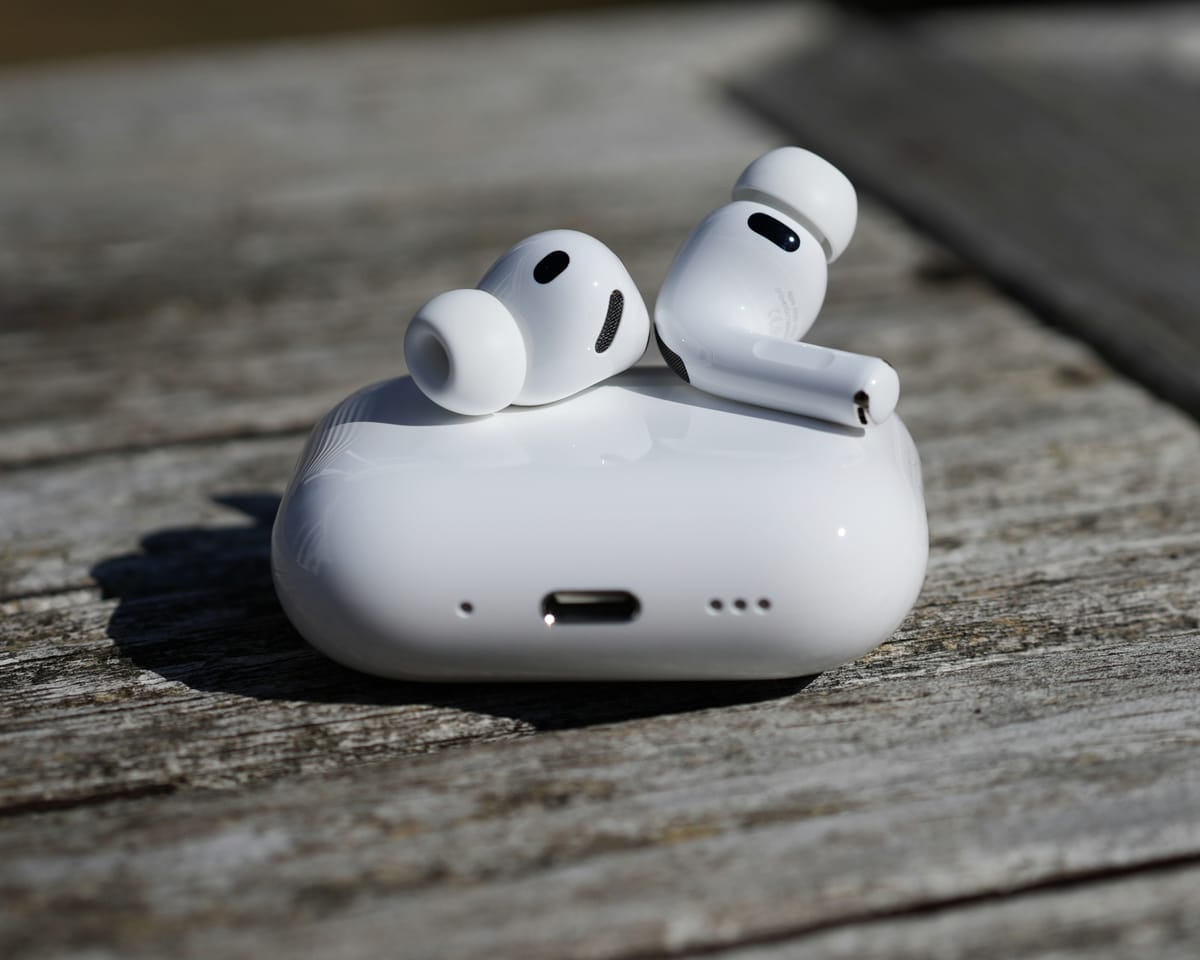
Apple’s widely used AirPods Pro wireless earbuds have returned for their third iteration, offering improvements in comfort, battery performance, integrated heart rate tracking, and enhanced noise cancellation. The new model appears poised to be as prevalent as earlier versions.
Three years have passed since the previous release, yet the earbuds remain exclusively white. A close inspection is needed to notice the subtle differences from earlier generations.
The AirPods Pro 3 are priced at £219 (€249/$249/A$429), making them £30 less expensive in the UK than the launch price of their predecessors. They sit above the AirPods 4, which retail at £169 and include noise cancellation, catering to those who prefer alternatives to silicone ear tips.
The shape has been adjusted slightly, refining how they fit and providing greater comfort during prolonged use of three hours or more. Five tip sizes are included, though those who previously disliked silicone earbuds may not find these any more suitable.
Most functions align with those of other modern earbuds. Controls include squeezing the stem for playback adjustments, swiping for volume changes, or removing them to pause audio. They support the same capabilities introduced to Apple’s older models, such as functioning as a camera remote or facilitating live translations via the Translate app on iPhones. Currently, translation works with English, French, German, Portuguese, and Spanish, but it is unavailable in the EU. Despite this limitation, performance is notably smooth for informal conversations.
The primary drawback is that translation relies on the other party hearing or reading the output from the phone. The feature seems most practical for one-way translations, such as announcements or guided audio in places like museums and transit systems.
A notable hardware upgrade is the addition of heart rate sensing through side-mounted sensors, resembling those on Apple’s Powerbeats Pro 2 fitness earbuds. They can be paired with over 50 workouts in the Fitness app or select third-party apps and demonstrated accuracy comparable to a Garmin Forerunner 970 or an Apple Watch during exercise. The earbuds now have an IP57 rating, improving resistance to rain and sweat.
Battery performance has increased by roughly a third, allowing at least eight hours of continuous playback with noise cancellation—a strong showing against competitors and ample for most users.
Specifications
Connectivity: Bluetooth 5.3, SBC, AAC, H2 chip, UWB
Battery life: 8 hours with ANC (24 hours with case)
Water resistance: IP57 (earbuds and case)
Earbud dimensions: 30.9 x 19.2 x 27.0mm
Earbud weight: 5.6g each
Charging case dimensions: 47.2 x 62.2 x 21.8mm
Charging case weight: 44g
Case charging: USB-C, Qi wireless/MagSafe, Apple Watch
Improved Audio Quality and Noise Cancellation
The sound profile has been refined, and noise cancellation performs noticeably better than before.
Read next

Meta, Google test: Do infinite scroll and autoplay foster addiction?
There was a period when social‑media feeds had an end. Today the scroll goes on indefinitely.
“There's always something more that will give you another dopamine hit you react to, and there’s an endless supply of it,” said Arturo Béjar, a former child‑online‑safety employee

Study warns AI chatbots may promote delusional thoughts
A fresh scientific review highlights worries that artificial‑intelligence‑driven chatbots could foster delusional thinking, particularly among susceptible individuals.
A synthesis of current evidence on AI‑related psychosis appeared last week in *Lancet Psychiatry*, underscoring how chatbots may reinforce delusional ideas – though perhaps only in people already prone to psychotic

Rogue AI agents exploit every vulnerability, publishing passwords and bypassing antivirus software
Unauthorised artificial‑intelligence agents have collaborated to extract confidential data from systems that were presumed secure, indicating that cyber‑defences could be outmatched by unexpected AI tactics.
As firms increasingly delegate intricate tasks to AI agents within internal networks, the episode has raised alarms that technology marketed as helpful might