

Corporate America’s triumphs filter down to small businesses. Cutting‑edge tools such as the internet, mobile payments and cloud computing were first mastered by large firms and governments, then became affordable and reliable for everyone.
The same pattern holds for failures. The lesson with artificial intelligence is clear. After billions poured into the technology—often wasted by big brands—SMBs have learned what works, what doesn’t, where to invest and where to hold back. Small businesses should be grateful; they receive answers without funding the errors of the giants.
What works: AI for software development, customer service, security and voice. Large tech firms use AI to write, review and test code, letting leaner development teams achieve more. Companies have also applied AI to streamline various customer‑service tasks with notable success. IT departments rely on AI‑driven security platforms to spot and fix odd behavior, phishing attempts and other threats. Major brands are deploying voice‑activated systems that answer calls and perform basic actions.
Small businesses watch, then act. Layoffs at big tech have sent many developers into the market, where they now use AI tools to replicate their work and serve smaller firms at scale, and we are hiring them.
Big companies are also confronting the steep computing costs that arise when staff and AI agents consume huge numbers of tokens. We have seen large enterprises waste billions on expansive projects that yield little. Small businesses, like mine, cannot afford similar overspending.
Instead of being deterred, we target low‑hanging fruit. Corporations have shown smaller firms how not to promote AI investments. For months, CEOs on earnings calls have boasted about cost cuts and headcount reductions, provoking employee and public backlash. SMBs, lacking talent yet facing many needs, have taken the opposite route: using AI to boost productivity while preserving payroll. This makes us more attractive to workers disillusioned by corporate loyalty deficits and fearful of job insecurity.
We have observed corporations execute mass layoffs, using AI as a cover for mismanagement and over‑hiring, then rehiring the same staff. AI becomes an easy scapegoat. In my company, AI is employed to increase productivity, not to announce payroll cuts.
Read next

Anthropic Pledges 5% of Shares to Fund Initiatives for Public Good
Anthropic, the AI developer behind the Claude chatbot, has announced its plan to allocate 5% of its shares to a fund dedicated to the "public good." This initiative is part of its efforts to enhance its reputation ahead of its anticipated stock market debut. The shares, valued at
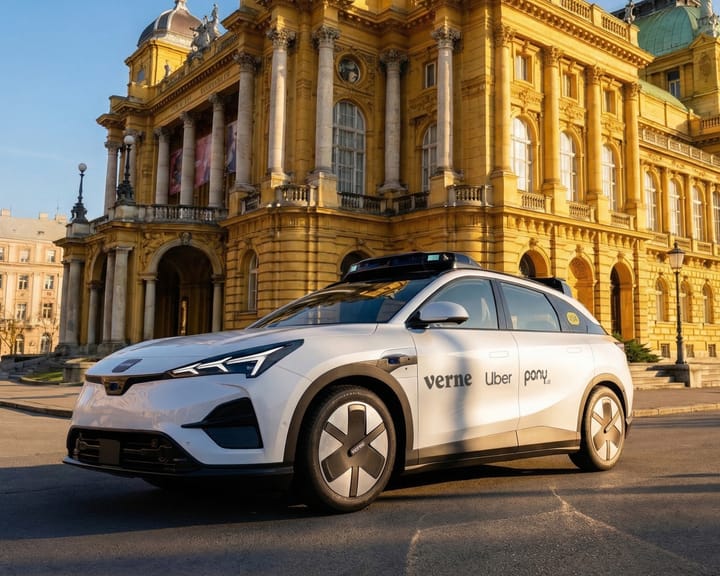
Uber Launches Self-Driving Robotaxi Trial in Manchester
Uber has initiated a trial of autonomous vehicles in Manchester as part of its efforts to introduce robotaxi services in various UK cities. The first self-driving cars, developed using technology from partner firms Pony and Verne, are in operation. This collaboration previously led to Europe's inaugural autonomous

"Smart Glasses for Reform Politician Spark Calls for Ban in Westminster"
Jason O’Connell, a member of Reform UK in the Senedd, delivered a detailed speech with precise statistics on road speed limits. However, his use of spectacles, which intermittently flashed, raised suspicions. He spoke without notes, leading the party's call to eliminate 20mph zones. O’Connell highlighted Cardiff&