
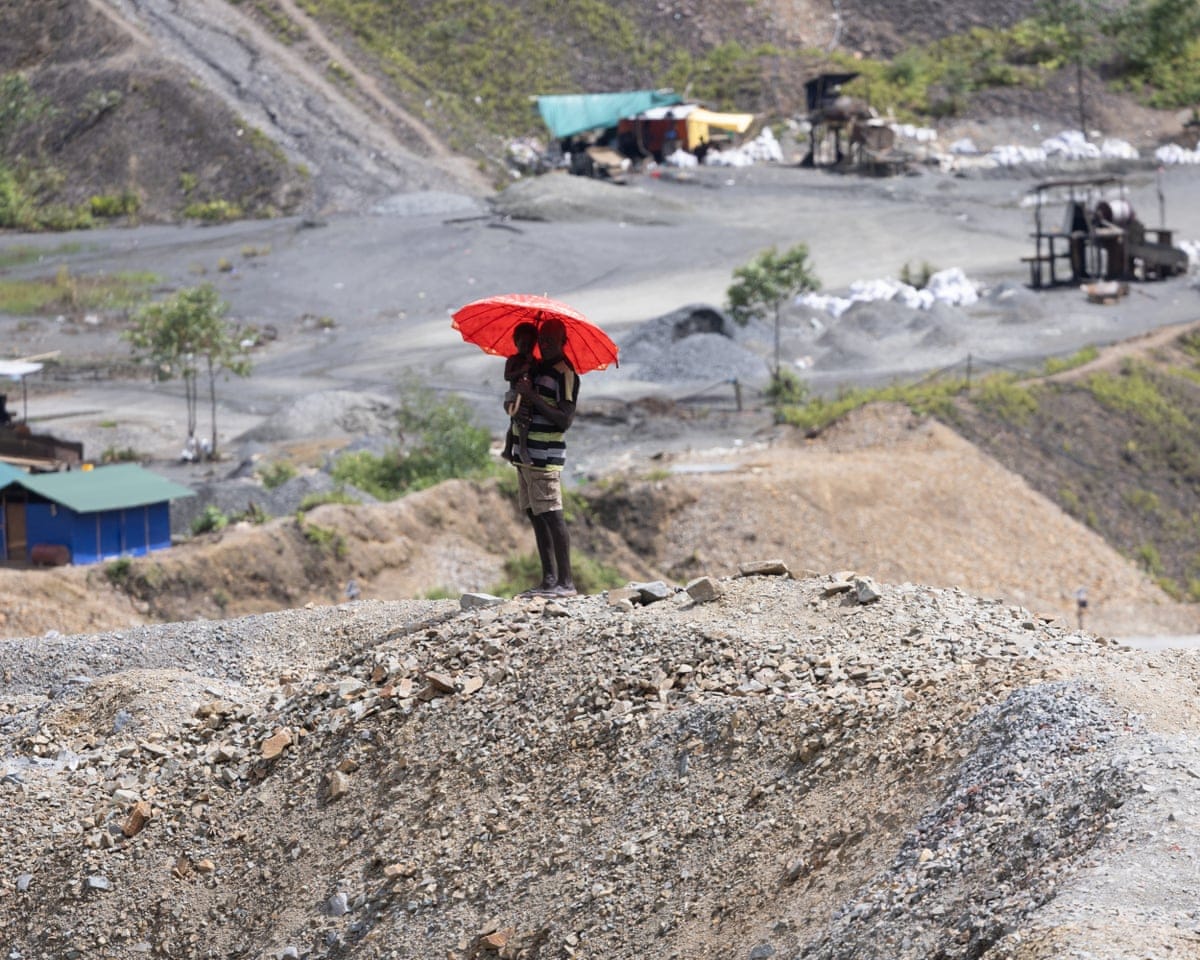
Noah Doko absentmindedly touches a scar on his forearm. The ex-rebel fighter sits among the ruins of Panguna village in Bougainville, near the hills where he once hid and fought as a young man.
As a teenager, he was shot by Papua New Guinea’s military—by someone who was supposed to be his ally. After the civil war, he was elected to parliament to advocate for veterans.
Now, he reflects on the possible revival of a mine he and his fellow fighters once sought to destroy.
Abandoned by Rio Tinto decades ago, the unrestored Panguna mine remains not just a scar but an unresolved wound for Bougainville.
Amid the rusted debris of the mine's massive structures, signs of life persist—families, including children, digging by hand for traces of valuable minerals in harsh conditions.
Yet, within this tainted crater lies Panguna’s paradox. The same foreign project that once divided the island, buried villages, and polluted rivers now represents hope for Bougainville’s unity, prosperity, and independence.
“Panguna mine should reopen,” Doko says, gesturing to the vast pit. “The wealth needed for Bougainville’s independence is right there.”
He dismisses concerns about global powers eyeing his homeland. “[Our] independence must be supported by our own wealth, by Bougainville’s resources,” he insists.
Though he may not live to see it, Doko believes Bougainville’s independence is unstoppable. “No one can deny us. I stand for this now so my descendants will see freedom and prosperity.”
The Push for Independence
The world’s newest nation has a target.
“We are at the final stage,” Bougainville’s president, ex-rebel Ishmael Toroama, told Papua New Guinea’s leader earlier this year. “My people chose 1 September 2027 as independence day.”
Toroama, once a celebrated guerrilla leader known for defying PNG’s superior forces, remains more comfortable in battle gear than formal wear. Over two decades, he has shifted from warrior to negotiator, quietly advocating for independence abroad.
In 2019, Bougainvilleans voted nearly 98% in favor of breaking from PNG. But the mandate also brings pressure—Toroama must deliver.
Read next
Jaguar Land Rover suppliers voice ‘everything is against us’ amid cutbacks
David Roberts, chair of Coventry-based Evtec, says the outlook for Britain’s automotive sector is grim, with “everything against us.” Evtec is a tier 1 supplier to Jaguar Land Rover, which this week announced 4,000 job cuts over two years despite chancellor John Healey’s attempt to talk
Europe’s fighter jet plans in disarray: what comes next?
When former ECB president and Italian PM Mario Draghi urged Europe to catch up economically with the US and China, defence collaboration was prescribed. No more should each nation build independent boats, tanks or jets; allies should share costs and technologies.
Europe stumbled at the first hurdle. German Chancellor Friedrich
John Healey supports growth but insists Labour must be truthful about spending
John Healey has stated that his primary goal as chancellor will be to boost economic growth, while acknowledging that Labour must be straightforward about controlling public spending at next month's budget.
In his first major address since assuming the role in July, Healey said the leading focus of