

The international financial organization cautions the world economy may face persistent high interest rates unless inflation in service sectors decreases significantly.
The Washington-based IMF increased its 2024 growth forecasts for both the UK and eurozone, yet highlighted lingering price growth within the services sector as a challenge to central banks' efforts at slowing inflation.
Though not directly addressing any single nation, the broad warning aligns with Bank of England policymakers expressing concerns about service sector inflation becoming entrenched in the UK.
Inflation rates have shown some decline since early 2023; however, this trend is still observed within the services industry. The Office for National Statistics will publish updated cost-of-living data on Wednesday.
The organization's projections regarding the global economy remain largely unchanged from its previous report in April, with slight revisions to growth estimates for 2025.
A stronger than anticipated start to 2024 prompted an upward adjustment of the UK and eurozone growth forecasts by the IMF. Growth predictions indicate further improvement over time.
In addition, a narrowing gap in growth between the US and EU is expected within the next year according to the IMF report.
Chancellor Rachel Reeves acknowledged that while economic growth projections are improving, challenges remain significant for the economy's future. She emphasized the government's commitment to implementing measures aimed at strengthening the foundations of the UK economy.
The IMF believes global inflation will gradually decrease over time but cautioned that service sector cost pressures may hinder sustained progress in reducing overall inflation.
"Even though we predict a reduction in global inflation this year, uncertainte is still high and risks are present," said Pierre-Olivier Gourinchas, the IMF's economic counselor. "In particular, there have been delays in bringing down price increases within the US services sector."
The risk of persistent inflation within the service sector is attributed to wage and pricing decisions made by businesses, as this sector plays a significant role in the UK economy's output. The IMF also expressed concerns about potential policy shifts resulting from upcoming elections worldwide, including increased protectionism and challenges to global cooperation on issues like climate change.
Read next
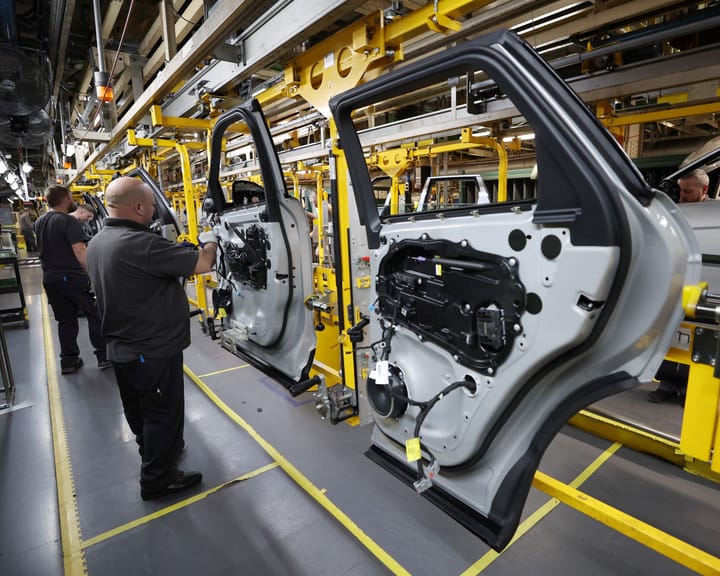
Jaguar Land Rover suppliers voice ‘everything is against us’ amid cutbacks
David Roberts, chair of Coventry-based Evtec, says the outlook for Britain’s automotive sector is grim, with “everything against us.” Evtec is a tier 1 supplier to Jaguar Land Rover, which this week announced 4,000 job cuts over two years despite chancellor John Healey’s attempt to talk

Europe’s fighter jet plans in disarray: what comes next?
When former ECB president and Italian PM Mario Draghi urged Europe to catch up economically with the US and China, defence collaboration was prescribed. No more should each nation build independent boats, tanks or jets; allies should share costs and technologies.
Europe stumbled at the first hurdle. German Chancellor Friedrich
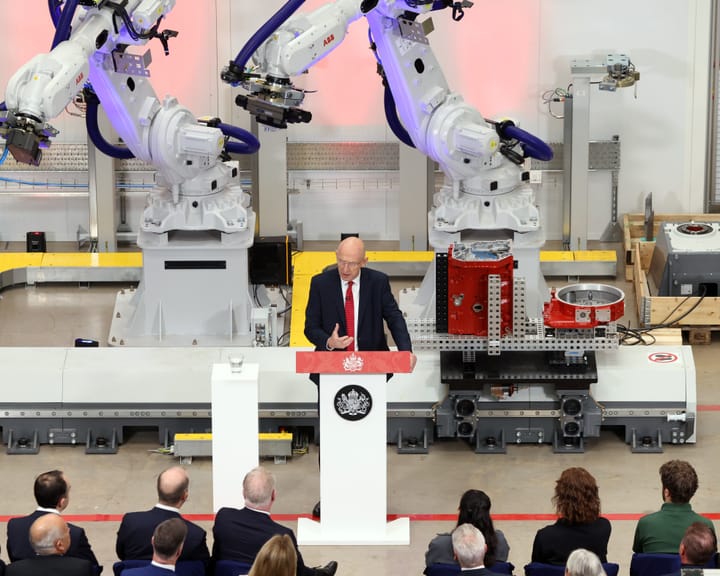
John Healey supports growth but insists Labour must be truthful about spending
John Healey has stated that his primary goal as chancellor will be to boost economic growth, while acknowledging that Labour must be straightforward about controlling public spending at next month's budget.
In his first major address since assuming the role in July, Healey said the leading focus of