
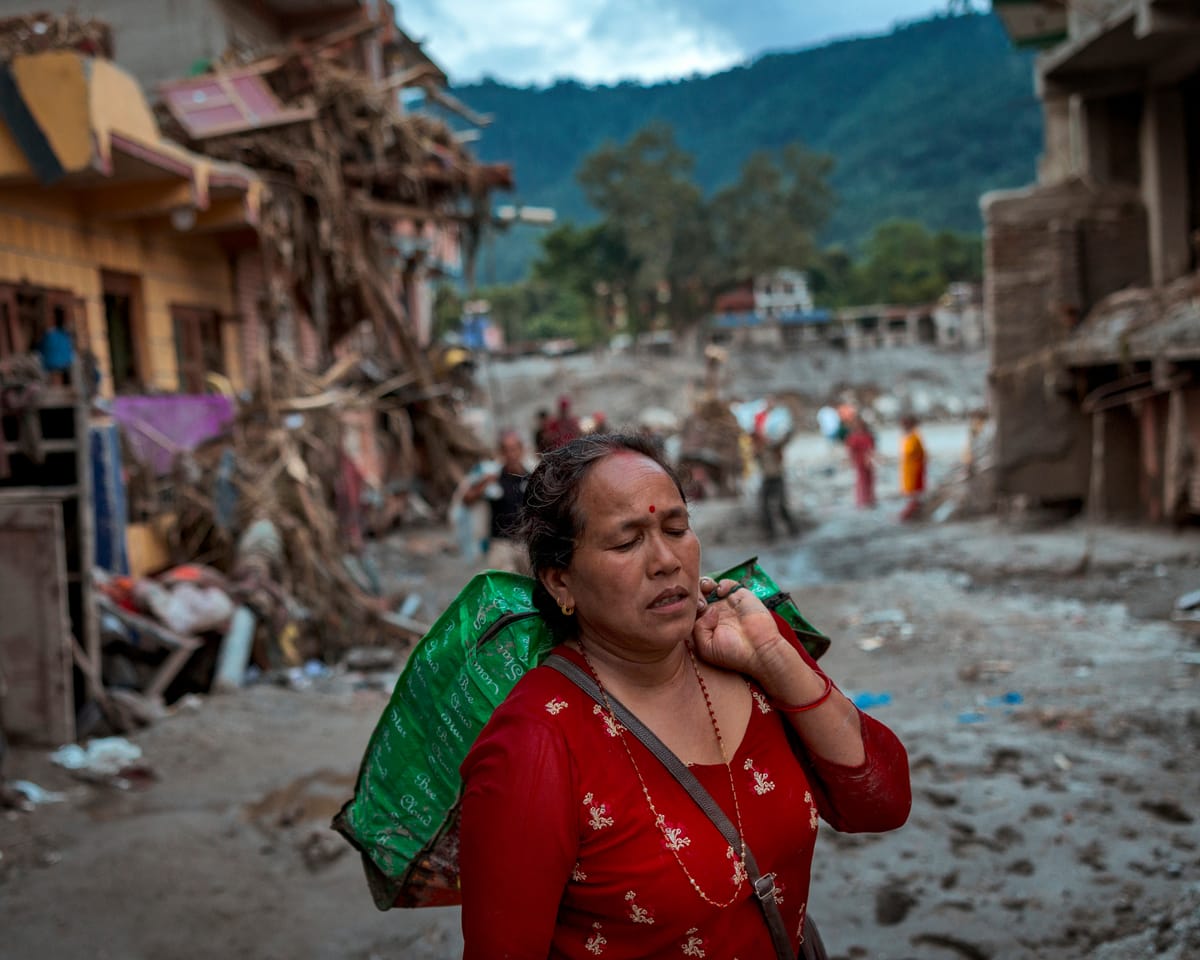
Rescuers in Nepal and Tibet have fought through mud that sucks at the legs while battling the danger of new floods to locate thousands still missing after a massive wall of water tore through the Himalayan border area, wiping out whole villages.
Updated figures on Sunday placed the number of missing persons at 3,048, including many foreigners. Altogether 797 deaths have been confirmed in Nepal and Tibet, with reports that some bodies may have traveled as far as India.
Nepal began burying the hundreds of recovered bodies after taking DNA samples so families could later identify them and perform traditional rites.
The disaster struck the border on Wednesday morning, triggered by a glacial collapse that sent a torrent of water and debris downstream, according to the US Geological Survey.
Nepal’s foreign minister urged a worldwide response to the climate crisis, saying the small, impoverished Himalayan nation bears a disproportionate share of the impact.
“Despite contributing only 0.1% of global emissions, the people of Nepal have become major victims of climate change,” Shisir Khanal said Saturday.
More than 3,700 individuals have been rescued in Nepal. The government reported that 2,502 people, among them 592 foreigners, remain unaccounted for. The latest death count stands at 781.
Chinese authorities announced 16 fatalities and 546 missing, of whom 261 were foreign nationals: 104 Nepalese, 49 Indian, 33 Latvian, 18 American and 15 British.
A breakthrough over the weekend saw Nepal’s army drive a pipe into a tunnel at the Trishuli 3A hydroelectric plant, where over 100 workers are believed trapped.
Home Minister Sudan Gurung explained: “We have begun supplying air through the small opening and will now start excavation and send rescue teams inside.”
Rescue operations concentrate on the Trishuli 3A and 3B sites, where 933 hydropower employees are listed as missing, according to the disaster authority.
Authorities warned Sunday of rising water levels and advised caution, noting that the Bhotekoshi river in Rasuwa has seen its flow increase further.
Early Sunday, flood alerts were sent to mobile phones as crews worked to clear the highway linking Kathmandu to the flooded zone.
In Dhading, one of the hardest‑hit districts, some residents returned to damaged homes to retrieve belongings, while others struggled to interpret the constant alarms that followed the initial floods.
Read next
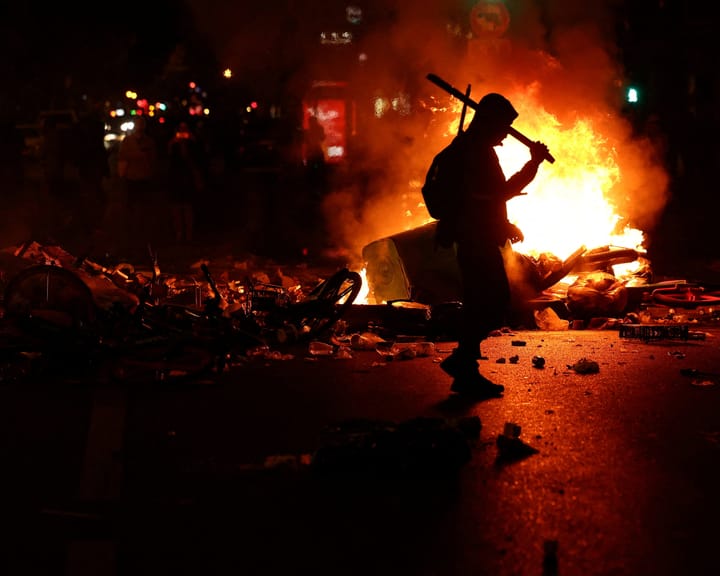
Interior Minister Admits French Police Lost Control Amid Riots
France’s Prime Minister has directed regional authorities to consider implementing partial curfews in certain cities following an admission by the government that police lost control during violent protests over the weekend. Sébastien Lecornu stated after an emergency cabinet meeting that he was determined to restore public order and suggested
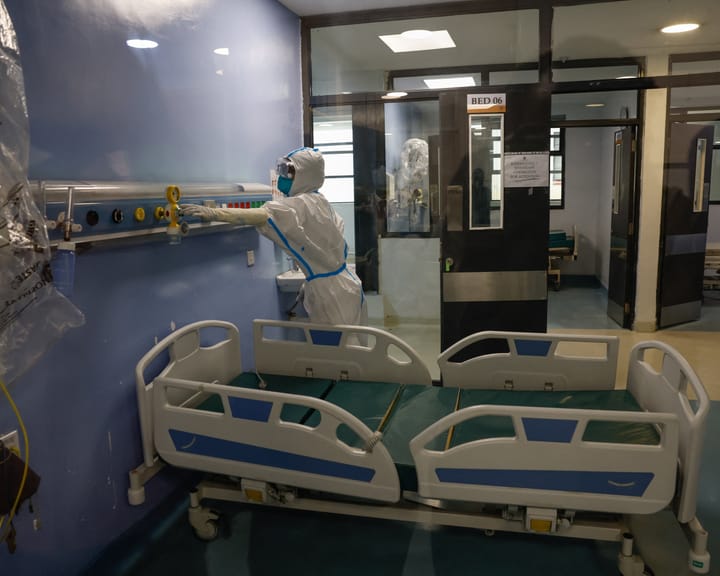
Kenya's Latest Ebola Case Exposes Gaps in U.S. Health Services Following Trump's Budget Cuts
In Kenya, a third individual has tested positive for Bundibugyo ebolavirus, marking the nation's first cluster of Ebola cases. This development occurs as the second-largest Ebola outbreak in history continues to impact the region, resulting in over 4,300 deaths and more than 9,000 infections.
The

France in Chaos as Looting Extends into Second Night: 'War Zone' Descriptions Abound
In the early hours of Monday, two motorbikes carrying passengers each stopped at a traffic light in a backstreet near Paris's bustling rue de Rivoli. One rider remarked to the other about targeting areas with high foot traffic and elaborate shop windows. Shortly thereafter, ten men wearing ski