
Goldman Sachs has enhanced compensation packages for its employees by 17%, following a significant rise in profits during the second quarter amidst an increase in dealmaking activities. The investment powerhouse allocated $4.2 billion (£3.2 billion) to employee remuneration and benefits, which included salaries, pensions, and individual bonuses for its 45,300 employees from March to June—an almost 20% increase compared to the previous year's equivalent period.
Goldman Sachs has reportedly spent $8.8 billion on staff compensation since the beginning of January, attributing this substantial investment to its improved operational performance. The firm disclosed that second-quarter profits saw a remarkable 150% surge from last year's figures, reaching $3 billion as opposed to the $1.2 billion reported earlier in the fiscal year.
The uptick in profits was primarily due to heightened dealmaking activity with investment bankers facilitating various mergers and acquisitions. Noteworthy transactions include Goldman Sachs' role as a broker for ExxonMobil’s $60 billion acquisition of Pioneer Natural Resources, alongside competitors Morgan Stanley and Citigroup.
David Solomon, the chairman and CEO at Goldman Sachs, commented on these results: "We are pleased with our robust second quarter performance and our overall achievements in the first half of the year, signifying strong growth across our banking, markets, asset and wealth management divisions."
A recovery from a prolonged downturn in dealmaking over the past two years was witnessed due to high borrowing costs and global economic uncertainty. However, an optimistic financial outlook and potential reductions in interest rates by central banks have revived demand for banking services. This resurgence is anticipated to result in increased bonuses, including those of Goldman Sachs' 6,000 staff based in the UK, who are no longer constrained by a previous bonus cap limiting payouts to twice an individual’s salary.
The bonus cap was initially introduced as part of regulatory reforms post-2007 financial crisis, intended to discourage short-term gains at the expense of long-term stability in banking operations. The incoming chancellor, Rachel Reeves, had previously stated that her party would not reconsider this cap when they secured a general election win.
Read next
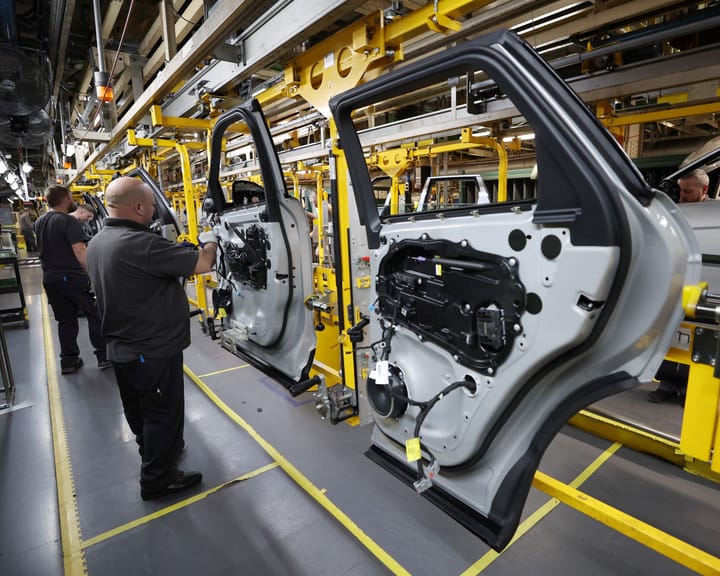
Jaguar Land Rover suppliers voice ‘everything is against us’ amid cutbacks
David Roberts, chair of Coventry-based Evtec, says the outlook for Britain’s automotive sector is grim, with “everything against us.” Evtec is a tier 1 supplier to Jaguar Land Rover, which this week announced 4,000 job cuts over two years despite chancellor John Healey’s attempt to talk

Europe’s fighter jet plans in disarray: what comes next?
When former ECB president and Italian PM Mario Draghi urged Europe to catch up economically with the US and China, defence collaboration was prescribed. No more should each nation build independent boats, tanks or jets; allies should share costs and technologies.
Europe stumbled at the first hurdle. German Chancellor Friedrich
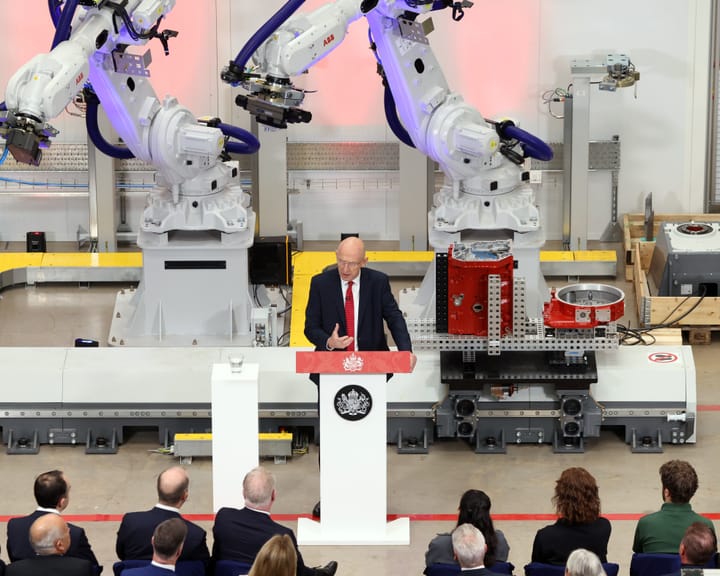
John Healey supports growth but insists Labour must be truthful about spending
John Healey has stated that his primary goal as chancellor will be to boost economic growth, while acknowledging that Labour must be straightforward about controlling public spending at next month's budget.
In his first major address since assuming the role in July, Healey said the leading focus of