
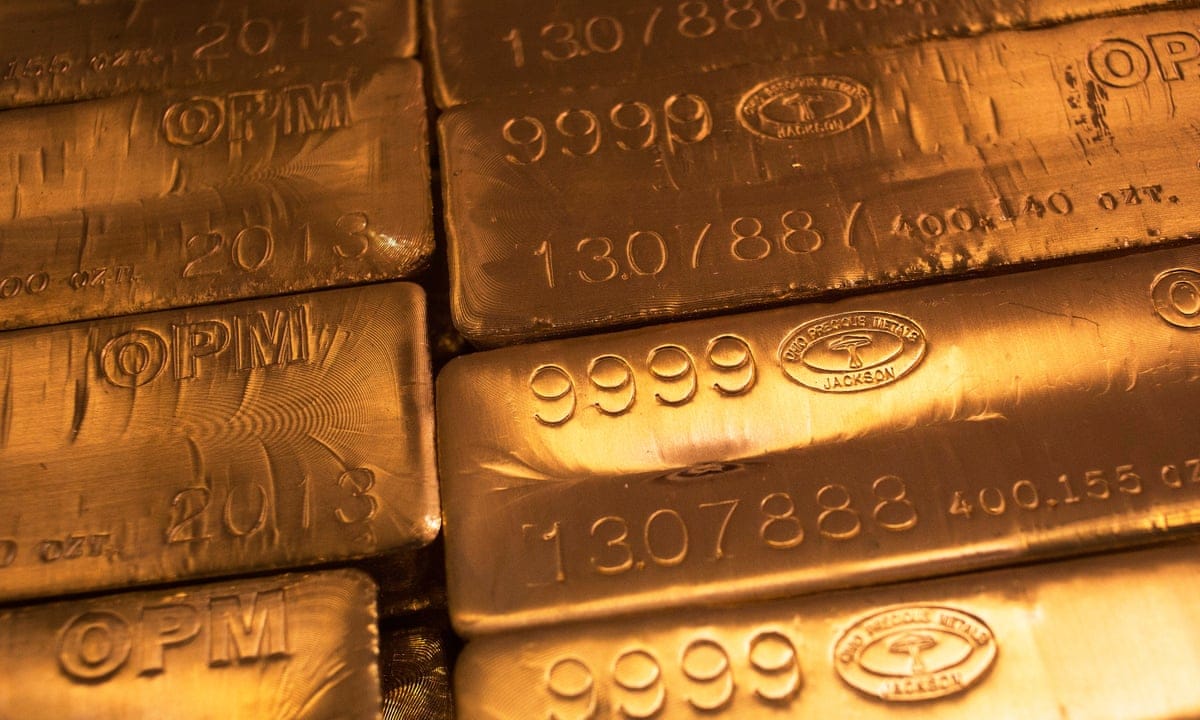
The US stock market has experienced substantial gains over the last two years, with significant increases across major indices such as the S&P 500, Dow Jones Industrial Average (DJIA), and Nasdaq Composite Index. Since President Joe Biden took office in January 2021, these benchmarks have surged by approximately 40%, setting new highs repeatedly. In parallel with this financial upswing, the US dollar has appreciated notably against major currencies worldwide, reaching record levels for gold prices earlier in the year.
Experts and market observers have grappled to account for these concurrent phenomena. Although fluctuations in the gold price may reflect investors' heightened risk perceptions amidst political and geopolitical volatilities—a scenario less applicable to stock market growth—the reasons behind continued equity market rallies remain elusive. On the other hand, declines in the Cboe Volatility Index (VIX) have been observed since 2022 but do not seem to fully explain either stock or gold price trends.
One theory suggests that advancements in artificial intelligence and related technologies may be propelling equity values, with notable effects seen in tech companies such as chip manufacturer Nvidia. While this sector has been the primary beneficiary of recent gains, broader market participation is evident across all sectors, not just technology.
Contrary to common expectations associated with rising interest rates—which typically depress stock and commodity prices—the US economy's performance appears to buck this trend. Despite increases in short-term interest rates over the past two and a half years, both equities and gold have maintained their upward trajectory. This raises questions about the role of Federal Reserve monetary policy on these market behaviors.
The answer may lie in examining other factors that contribute to financial markets' movements. One such factor is economic resilience; a robust US economy can fuel demand for various assets, including stocks and gold. Despite slowing growth rates to 2.5% in 2023—still above the century average of about 2% since 2001—consumer spending has remained strong due to significant legislation like the Chips and Science Act, Infrastructure Investment and Jobs Act, and the Inflation Reduction Act.
Moreover, GDP growth in recent years has defied expectations of economic downturns. Real GDP continues its upward trajectory into 2024, with investor confidence remaining strong despite predictions for an ongoing recession two years prior. This unwavering faith is also reflected in the sustained demand for US assets as a safe haven amidst geopolitical tensions and economic uncertainty.
However, it remains to be seen whether these trends will persist following future presidential elections.
Read next
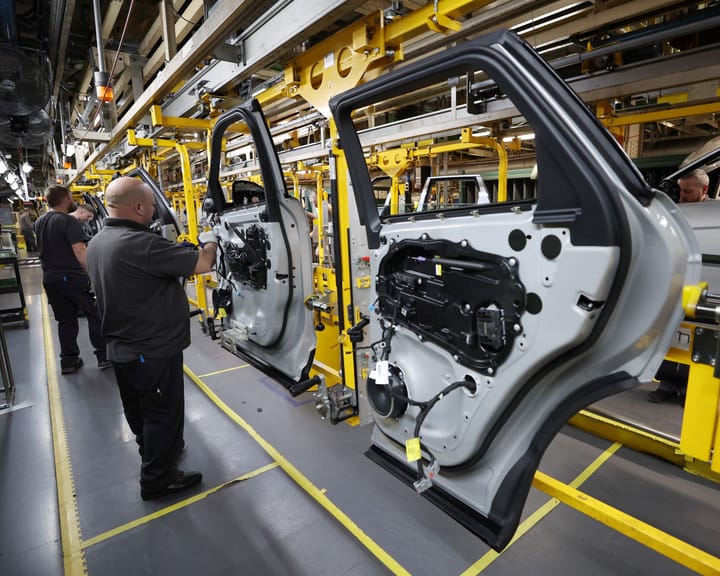
Jaguar Land Rover suppliers voice ‘everything is against us’ amid cutbacks
David Roberts, chair of Coventry-based Evtec, says the outlook for Britain’s automotive sector is grim, with “everything against us.” Evtec is a tier 1 supplier to Jaguar Land Rover, which this week announced 4,000 job cuts over two years despite chancellor John Healey’s attempt to talk

Europe’s fighter jet plans in disarray: what comes next?
When former ECB president and Italian PM Mario Draghi urged Europe to catch up economically with the US and China, defence collaboration was prescribed. No more should each nation build independent boats, tanks or jets; allies should share costs and technologies.
Europe stumbled at the first hurdle. German Chancellor Friedrich
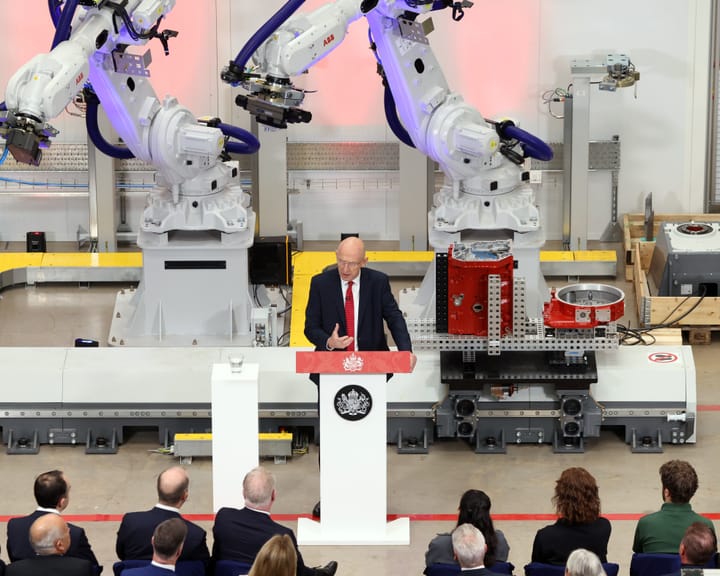
John Healey supports growth but insists Labour must be truthful about spending
John Healey has stated that his primary goal as chancellor will be to boost economic growth, while acknowledging that Labour must be straightforward about controlling public spending at next month's budget.
In his first major address since assuming the role in July, Healey said the leading focus of