
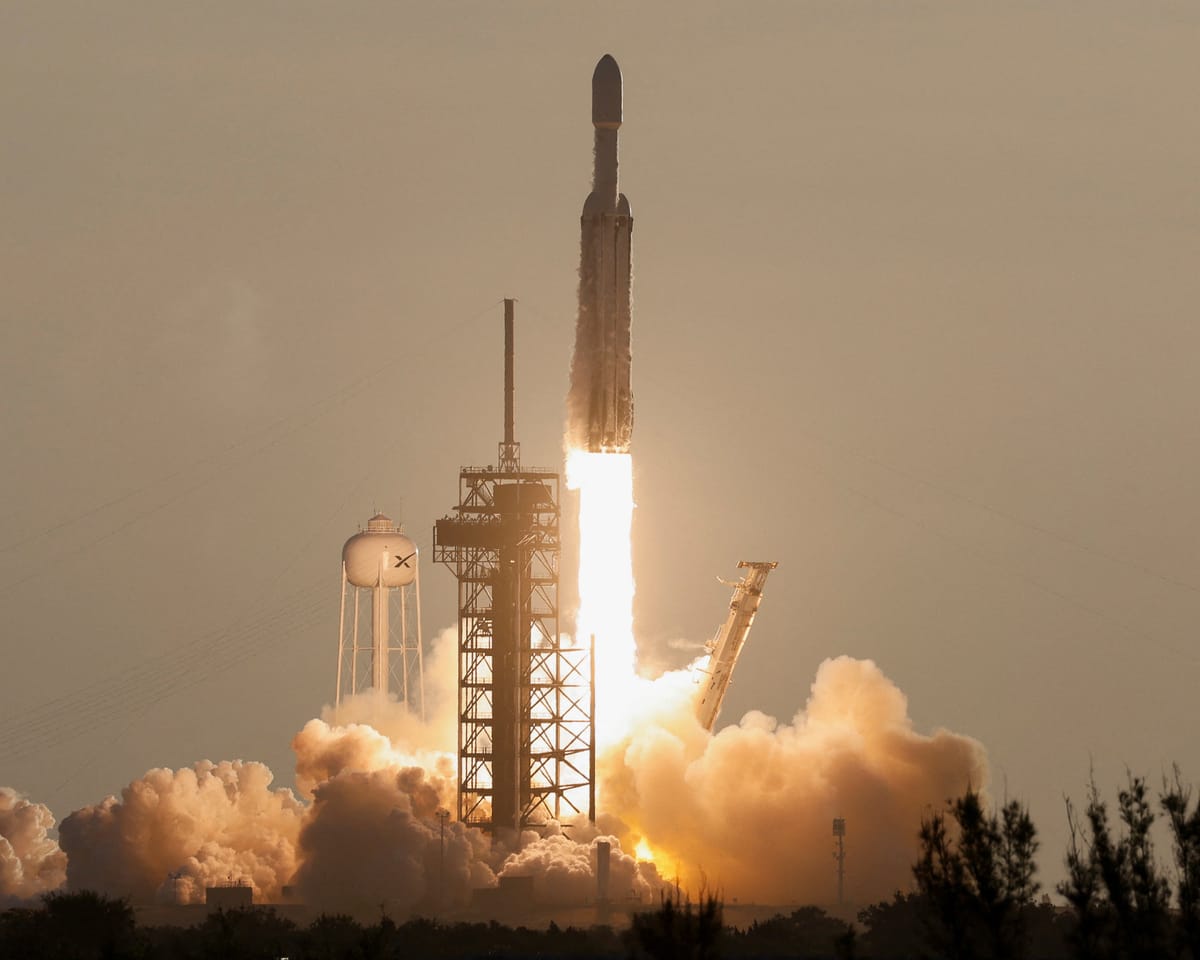
$4.3 billion space telescope that Donald Trump tried to cancel lifted off from Florida on Sunday as Nasa begins the next phase of its quest to unlock the universe’s secrets. The Nancy Grace Roman space telescope endured two proposed White House budget reductions and started a million‑mile trek into deep space from the launch pad at Kennedy Space Center.
Its primary goals are to hunt exoplanets and investigate how planets form. It will join the Hubble and James Webb telescopes in Nasa’s distinguished record of space exploration.
The Roman telescope, built over nearly a decade, is named for the agency’s first chief of astronomy, who died in 2018, and is many times more powerful than Hubble. It will complement its predecessor and Webb, which remain operational.
Its 300‑megapixel infrared camera provides the same sharpness and resolution as Hubble while offering a field of view at least 100 times larger. Each image will cover a sky area roughly 1.5 times the apparent size of a full moon.
A specialized coronagraph blocks starlight, making detailed imaging of planets around those stars possible.
Nasa expects the pictures to reveal “giant worlds that are older, colder and in tighter orbits than the hot, young super‑Jupiters that direct imaging has so far captured”.
Roman will travel to Lagrange point 2, a “parking spot” about one million miles from Earth, where it will share the Sun‑Earth orbital environment with Webb, though the two spacecraft will stay far apart.
It is not a direct replacement for Hubble (1990) or Webb (2021); instead it is intended to support and advance their scientific programs while also delivering independent discoveries.
Its wide‑field panoramas will identify targets that Hubble can examine with infrared, visible and ultraviolet light for a fuller picture, and Webb can then provide ultra‑sharp, detailed observations. Roman can also image regions surrounding Hubble‑ or Webb‑observed objects to give contextual information.
The first scientific images are slated for early 2027 after several months of calibration in its final orbit, and they will be released publicly, giving agencies, professional scientists and amateur astronomers an unprecedented chance to analyze the data.
“From objects in our outer solar system and exploding stars, to growing black holes and galaxies by the billions, very little will be beyond Roman’s reach,” Nasa said in an overview of its five‑year primary mission, which may be extended to a decade.
Read next
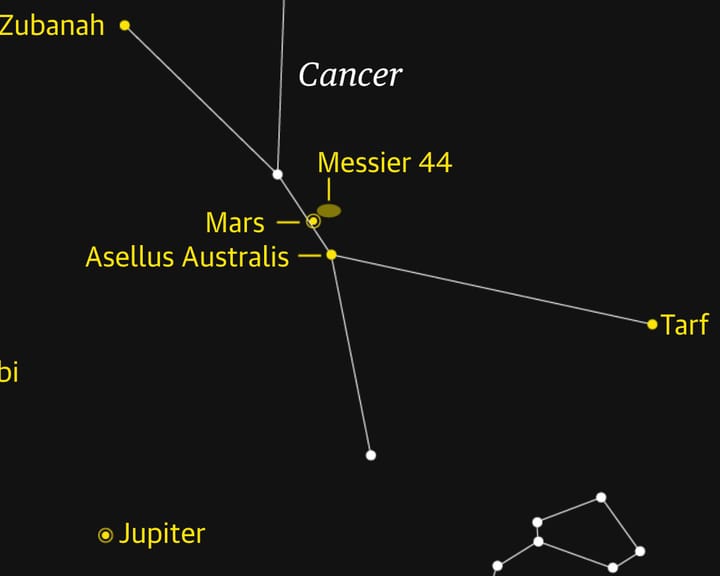
Mars Highlights the Enchanting Beehive Star Cluster
This week, Mars, the red planet, moves through the star cluster known as the Beehive, or Messier 44, located in the constellation Cancer. This cluster has been recognized since ancient times for its hazy appearance, earning the Latin name Praesepe, meaning a manger or crib.
Despite being one of the
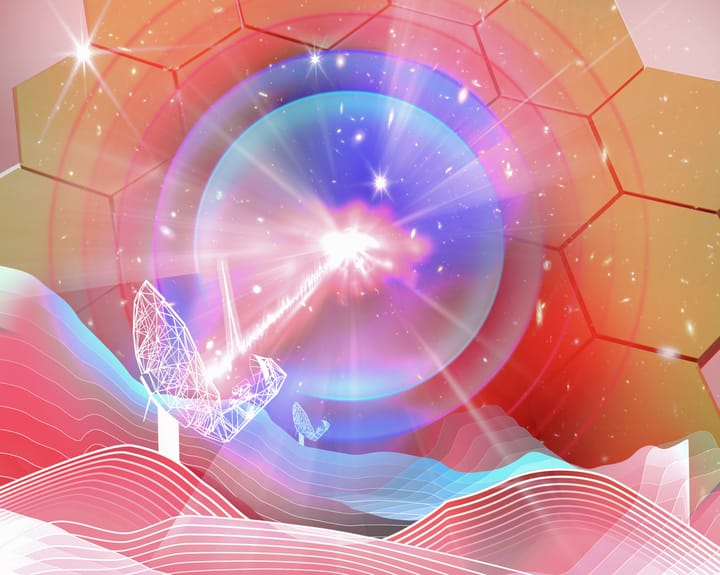
Astronomers Observe Mysterious Energy Burst from Distant Galaxy
In a distant past within the universe, astronomers have identified a mysterious burst of energy— a flash of radio waves that journeyed over 10 billion years to reach Earth. This event is considered the most distant fast radio burst (FRB) ever recorded, according to recent studies.
FRBs are powerful radio

How meteorologists recreated weather that helped decide the Second World War
Andrew Scott, in a Royal Air Force uniform with a trim moustache, looks queasy – as he might. Behind him stretches a massive Channel map; facing him, Brendan Fraser as General Eisenhower demands: “I need a forecast.”
The film Pressure, adapted from a true story, casts Scott as Group Captain James