
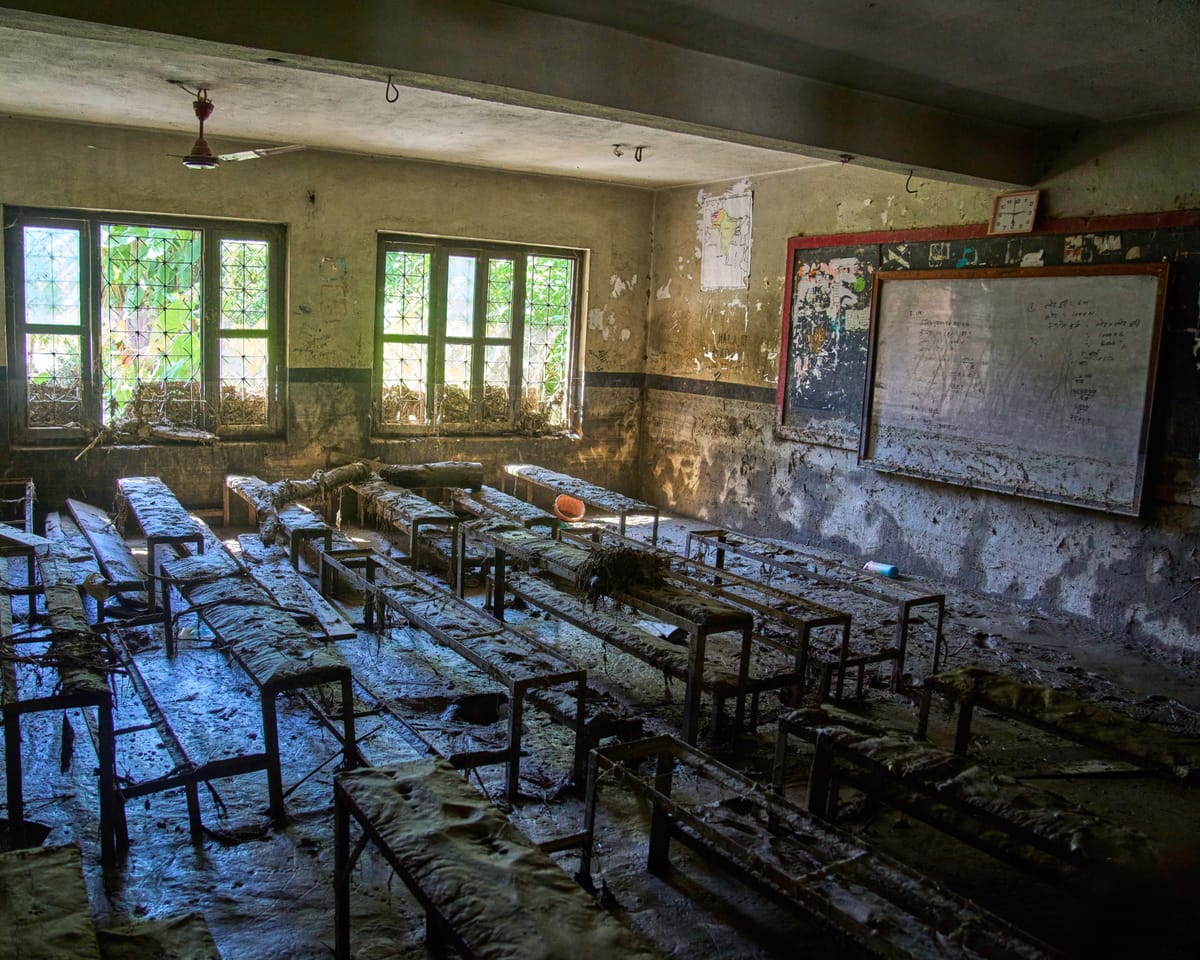
A headteacher in Nepal ordered the evacuation of 900 pupils from his school just before a massive wave of water hit their town during the catastrophic flash floods that have claimed nearly 800 lives and left thousands unaccounted for.
Rajendra Dawadi, headteacher of Tribhuvan Trishuli secondary school in Nuwakot, which serves 1,600 students, halted lessons and directed children to higher ground after receiving four alerts within minutes, one from Betrawati, a town situated upstream.
“I decided I could not wait any longer,” he told the BBC. “Even if the flood were not imminent, a single day of classes was not worth the risk.”
During the evacuation, Dawadi observed a hostel about 100 m from the river being swallowed by the torrent.
“If we had delayed by just ten minutes, none of us – students or staff – would still be here to speak,” he said.
A 16‑year‑old pupil recalled the narrow escape. “We survived by a matter of seconds,” Yunisha said. “We ran up a muddy slope as water and debris flooded the town. The market vanished in an instant.”
She was reunited with her family three days later.
At least 69 schools have been destroyed or damaged, affecting nearly 19,000 children, according to Save the Children.
In Dhading, one of the hardest‑hit districts, a group of pupils survived because they left their classroom during lunch. Others escaped when teachers ordered an immediate evacuation just before the waters surged.
A mother reported that teachers warned pupils: “There is a flood; leave your bags and meals,” which helped them survive.
More than 3,700 people have been rescued so far. The government reported that 2,502 individuals, including 592 foreigners, remain missing. The latest toll stands at 781 dead.
The disaster struck the Nepal‑Tibet border region of the Himalayas on Wednesday morning, triggered by a glacial collapse that sent a wall of water and debris downstream, the US Geological Survey said.
Nepal’s foreign minister urged a worldwide response to the climate crisis, noting that the Nepali people have become “major victims of climate change” despite contributing only a tiny fraction of global fossil‑fuel emissions.
Read next
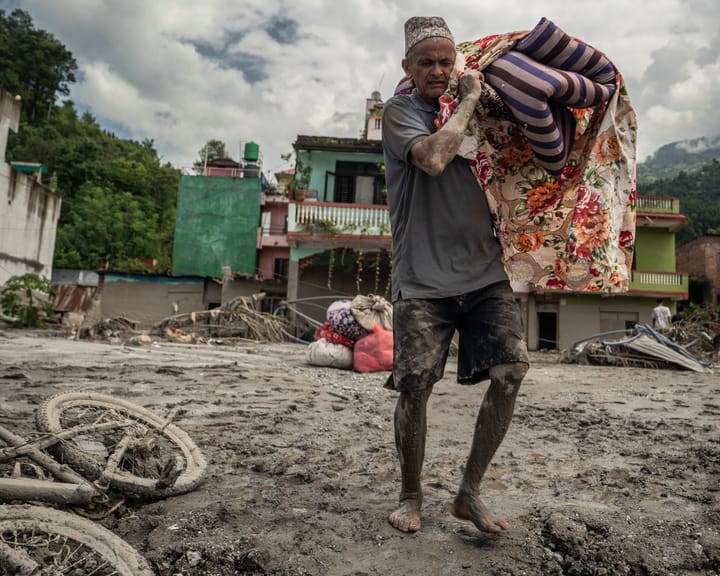
"The river has taken everything": people return to the remains of their homes in Nepal
Since the catastrophic floods swept through the Himalayan valleys of Nepal and Tibet, the death count has kept climbing. Hundreds of bodies have emerged from the thick, tar‑like mud that remained after the waters receded, and the toll stood at 797 in Nepal and Tibet by Sunday.
Morgues across

Ten years later: a solitary Black woman stands defiant against Swedish neo‑Nazis
An iconic photograph captured a solitary Black woman, her fist raised, blocking a column of hundreds of uniformed neo‑Nazis marching in 2016, and the image splashed across headlines worldwide.
At the time the picture was celebrated as a emblem of resistance to the far right. A decade later, as

Delcy Rodríguez of Venezuela defends the 'endless' advantages of her oil agreement with Trump
Venezuela’s interim president, Delcy Rodríguez, has defended her government’s contentious energy pact with Donald Trump, insisting the country will retain ownership and sovereignty over its vast oil reserves.
Rodríguez assumed power in January after Trump ordered the capture of President Nicolás Maduro and used a televised address on