
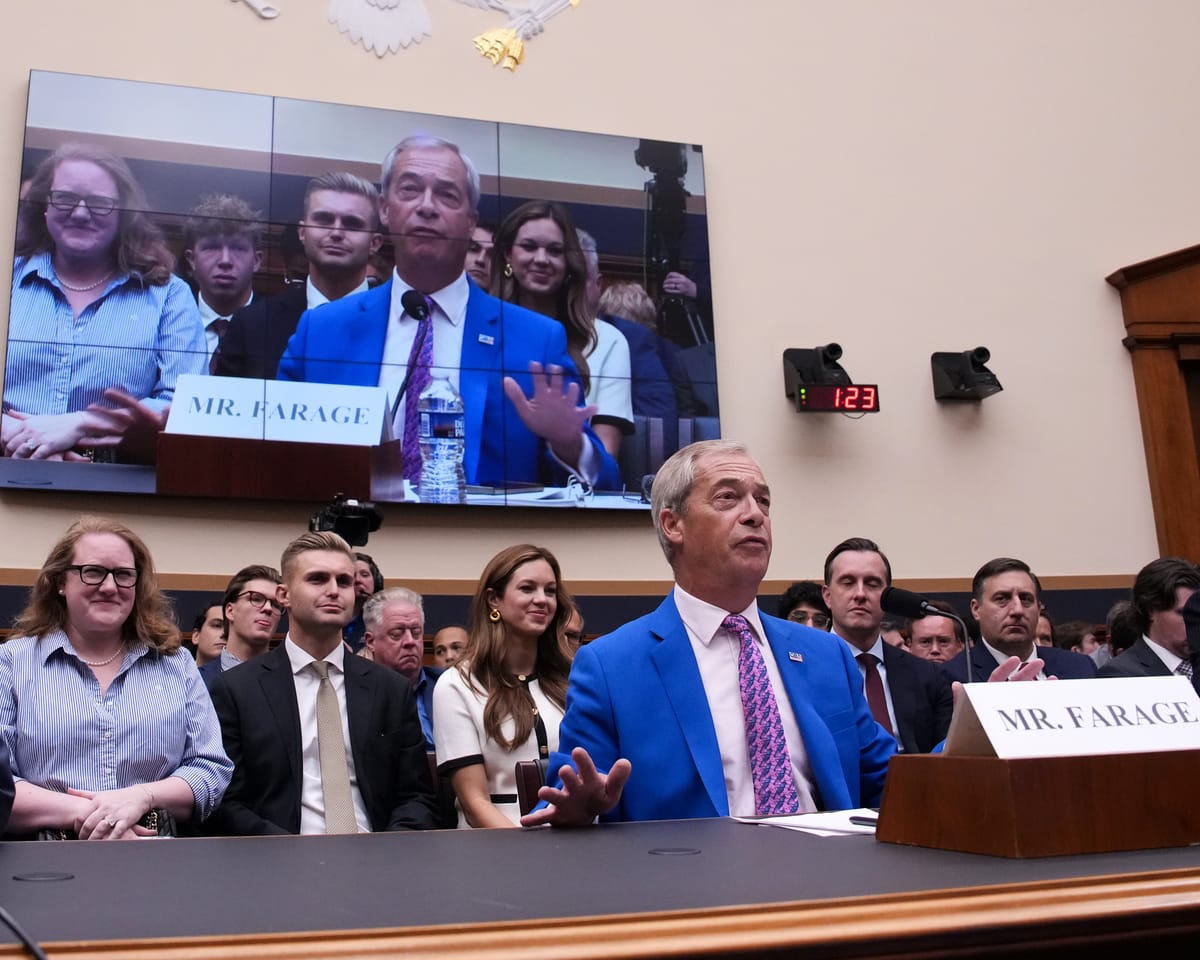
Nigel Farage Criticized as "Free Speech Hypocrite" During US Congressional Hearing
Nigel Farage faced scrutiny during a U.S. congressional hearing on censorship, with critics accusing him of hypocrisy on free speech while aligning himself with Donald Trump and influential tech figures.
The Reform UK leader, who skipped a parliamentary session to testify before the House Judiciary Committee, was invited by its Republican leadership to discuss what he described as the "deeply concerning" state of free speech in the UK.
However, he also faced sharp criticism from Democratic members, who questioned his commitment to free speech, pointing out that journalists from disapproving outlets have been barred from Reform events.
In his opening remarks, Democrat Jamie Raskin of Maryland stated that if Farage was truly concerned about the UK's Online Safety Act, he should have raised the issue in Parliament instead of lobbying in the U.S.
"If he cares about this, he should be making his case in the UK Parliament rather than here today," Raskin said. "Those in the UK who believe this Putin-admiring, Trump-aligned figure will safeguard their freedoms should look at what Trump's movement is doing to democracy in America. They might reconsider whether they want Farage reshaping their country."
Other Democrats echoed the criticism. Jerrold Nadler questioned why the committee invited testimony from a "marginal UK politician," while Hank Johnson asked Farage to confirm his party's small parliamentary presence.
Johnson accused Farage of using free speech rhetoric to court financial support from tech figures, specifically Elon Musk, owner of X: "You're just trying to win favor with tech elites to fund your political ambitions. You need Musk's backing to have any shot at becoming prime minister."
Farage dismissed the claim, noting that Musk has frequently criticized him: "Elon Musk attacks me almost weekly—but that’s democracy."
Raskin pressed Farage on his call to ban a pro-Gaza protest near Remembrance Sunday, calling it a "sensitive" period. Raskin countered: "I thought free speech meant the right to express views others might find offensive."
Raskin also asked why Reform frequently denies access to reporters from critical outlets. Farage denied personal involvement: "In 25 years, I can't recall ever banning anyone—though others might have."
Under friendlier questioning from Republicans, Farage cited cases such as Lucy Connolly, jailed for tweeting about burning asylum seeker accommodations, and Graham Linehan, as warnings of speech restrictions in the UK.
Read next
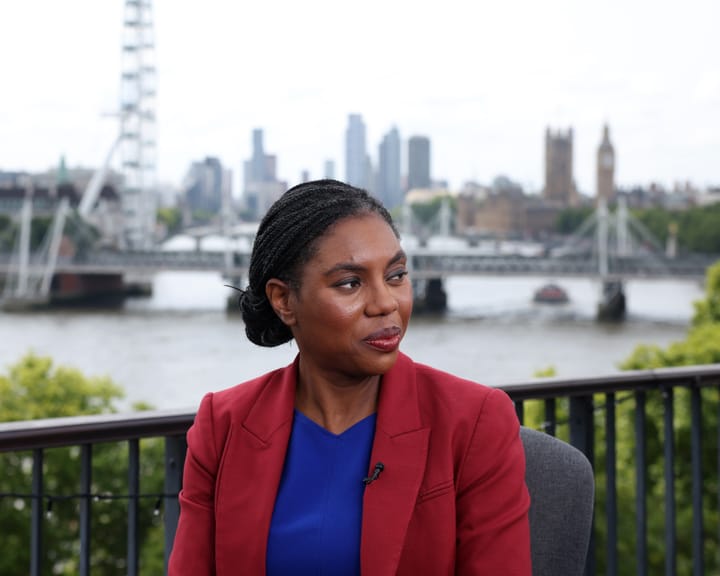
Badenoch returns to Conservative conference, markedly stronger than a year ago
A year ago, Tory MPs feared a fresh leadership revolt against Kemi Badenoch as Tories hit historic 14-16% support; November, after 12 months, was hushed: decisive challenge month. Yet, despite poor polls, “Keminisation” saw her impose style and authority.
More in Common’s Luke Tryl, director, said Badenoch holds

UK sanctions plan on illegal Israeli settlements faces criticism from US, Israel and British MPs
Today, with the agreement of Prime Minister Netanyahu, Israeli officials announced a series of countermeasures in response to new sanctions declared by the British foreign secretary of the Labour government, following a sequence of anti-Israel decisions by the same administration.
The accusations leveled today by the Labour foreign secretary,
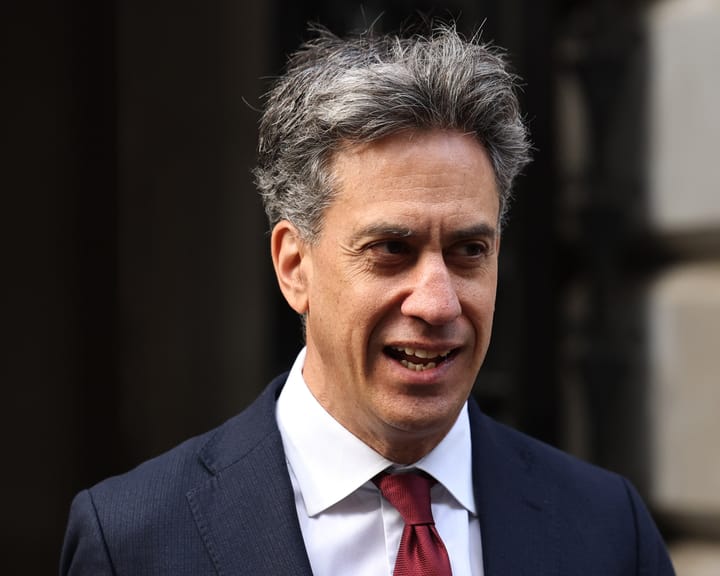
UK announces trade ban on Israeli settlements as tougher stance
Ed Miliband will announce a broad reset of the UK’s relations with Israel on Tuesday, pledging a more active stance in support of the Palestinian cause. In an intervention drawing fierce criticism from the US and Israel, the foreign secretary will impose a ban on trade in goods and