
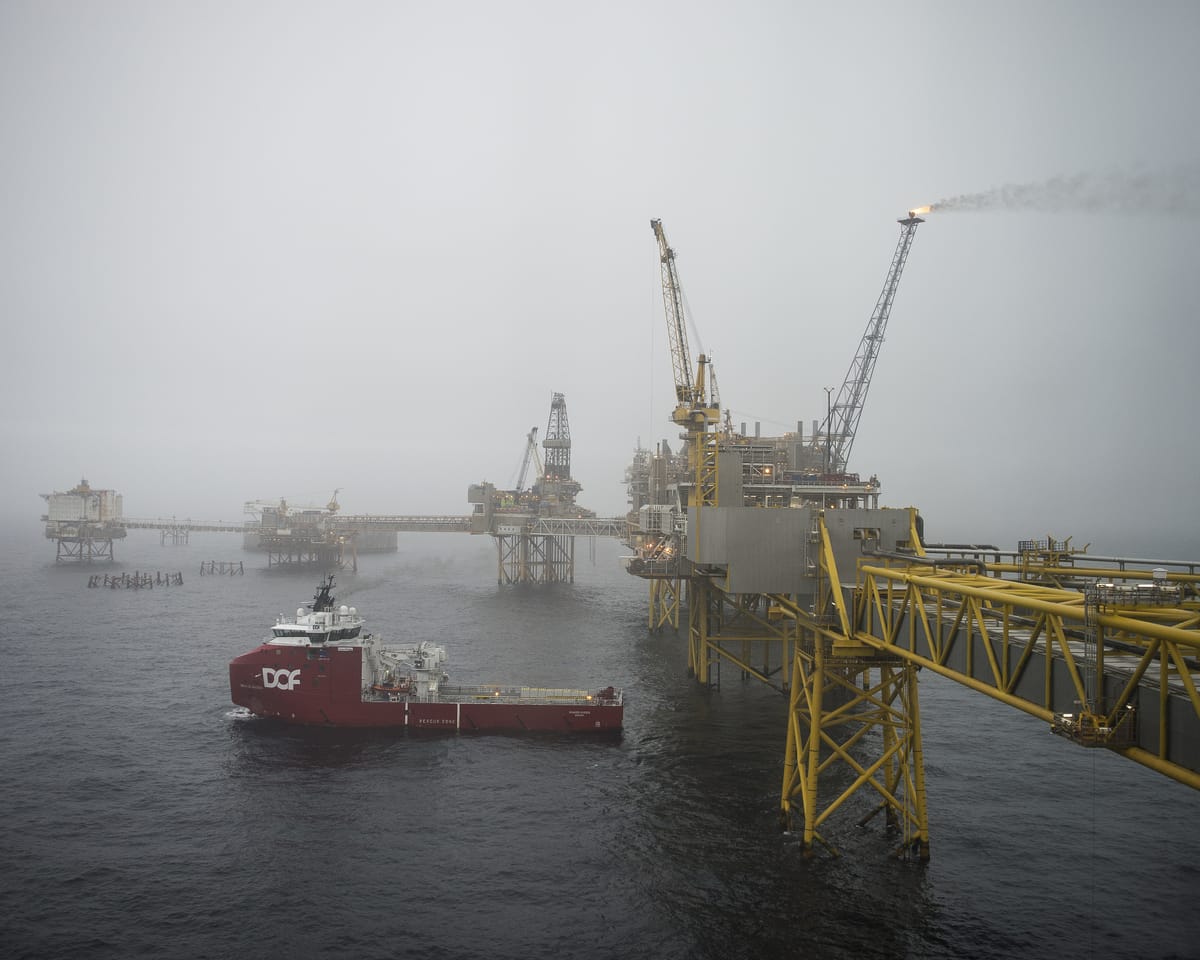
The Norwegian government has faced strong criticism after approving plans to reopen three North Sea gas fields that were shut nearly three decades ago, aiming to offset the energy shortfall caused by the Middle East conflict.
Following sharp increases in oil and gas prices after the US and Israeli strike on Iran in February, Oslo has also authorised exploration in 70 new sites across the North Sea, Barents Sea and Norwegian Sea.
The decision, taken by the Labour‑led administration, runs counter to the recommendations of the country’s environment agency and has angered left‑wing parties.
Prime Minister Jonas Gahr Støre announced the move, saying it would “create great value for the community, lay the foundation for good jobs nationwide, safeguard our common welfare and bolster Europe’s energy security and safety.”
The Albuskjell, Vest Ekofisk and Tommeliten Gamma fields in the North Sea were closed in 1998. The government intends to invest 19 billion kroner (about £1.5 billion) to restart them by the end of 2028, with production expected to continue until 2048.
Gas from the fields will be piped to Germany, while associated light oil will be sent to the United Kingdom.
Norway unveiled the plan to expand its North Sea oil and gas output amid a debate in the UK over the future of hydrocarbons in UK waters. The UK Labour government has blocked new exploration licences, but Energy Secretary Ed Miliband faces pressure to decide whether two projects, originally licensed under the previous Conservative administration, may proceed.
Norway’s state oil firm Equinor aims to develop the Rosebank oilfield, while Shell awaits a government ruling on its Jackdaw gas project. Climate activists warn that these projects would jeopardise the UK’s climate goals, whereas some industry analysts argue that domestically produced fossil fuels could cut emissions compared with US imports and deliver greater economic benefits.
The 70 new seabed areas opened for exploration include sites nearer the coast than ever before. Companies have until 1 September to submit applications, with licences expected to be awarded early next year.
Lars Haltbrekken, deputy leader and environment spokesman for the Socialist Left party, called the decision madness and accused the government of greenwashing.
“It shows that the government is once again blatantly disregarding environmental advice from its own experts,” he said. “All the talk about responsible oil extraction is nothing but nonsense. It’s greenwashing through and through, with fragile and important natural habitats put at risk despite full awareness.”
He added that expanding licence areas would not resolve the current oil crisis and could cause “potentially catastrophic consequences for fish and bird populations.”
“We are now risking oil drilling right up to the shoreline. If an accident occurs, we have no chance of preventing an environmental catastrophe.”
Read next
Jaguar Land Rover suppliers voice ‘everything is against us’ amid cutbacks
David Roberts, chair of Coventry-based Evtec, says the outlook for Britain’s automotive sector is grim, with “everything against us.” Evtec is a tier 1 supplier to Jaguar Land Rover, which this week announced 4,000 job cuts over two years despite chancellor John Healey’s attempt to talk

Europe’s fighter jet plans in disarray: what comes next?
When former ECB president and Italian PM Mario Draghi urged Europe to catch up economically with the US and China, defence collaboration was prescribed. No more should each nation build independent boats, tanks or jets; allies should share costs and technologies.
Europe stumbled at the first hurdle. German Chancellor Friedrich
John Healey supports growth but insists Labour must be truthful about spending
John Healey has stated that his primary goal as chancellor will be to boost economic growth, while acknowledging that Labour must be straightforward about controlling public spending at next month's budget.
In his first major address since assuming the role in July, Healey said the leading focus of