
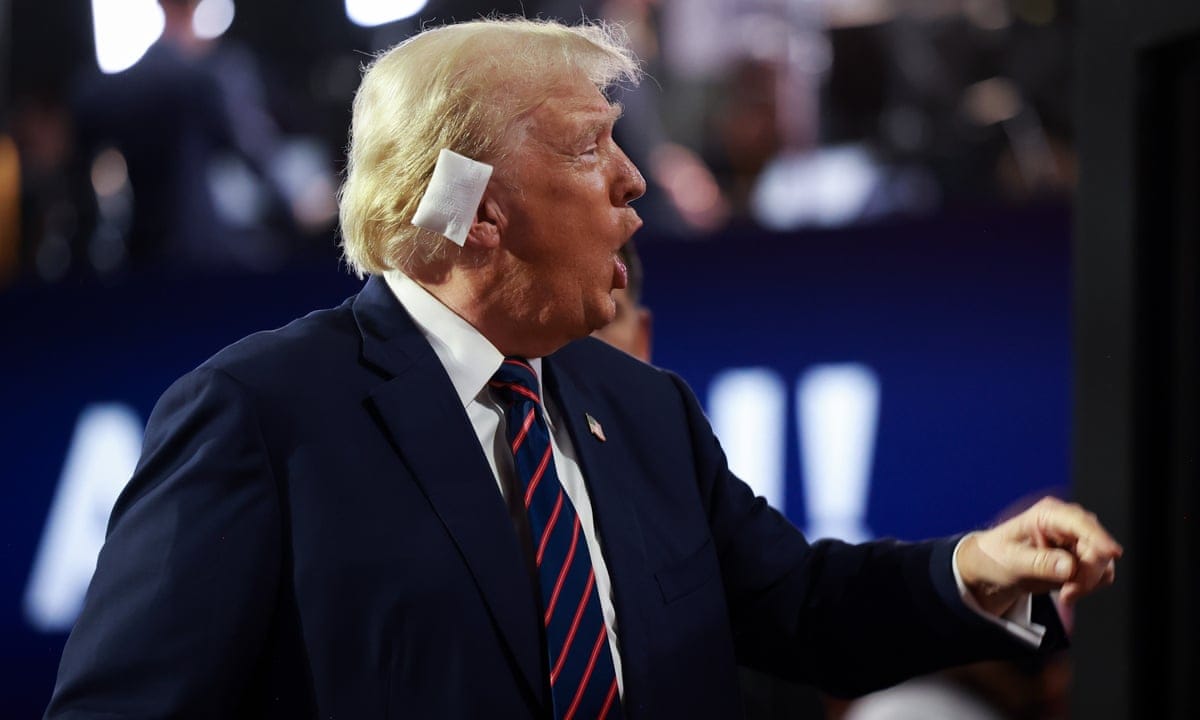
The stock values of prominent chip manufacturers have decreased following remarks by a former president about Taiwan's role in global technology sectors potentially needing to fund its own security measures against China.
Semiconductor and related companies saw their shares decline the day before, influenced both by previous comments from Trump and rumors of potential stringent trade regulations involving chip exports to China under a future administration.
Taiwan Semiconductor Manufacturing (TSMC), which ranks as the largest contract chip producer worldwide, experienced a 2.4% drop in value on Thursday, after already falling by 7% the day before due to Trump's questions about America acting as Taiwan's protector while allegedly losing its own chip industry presence.
The US Nasdaq index had one of its poorest days since December 2022, decreasing by 2.8%, following an unverified report that suggested potential limitations on the trade of semiconductors to China under a hypothetical new administration.
The report mentioned the consideration of a policy known as the foreign direct product rule, which might allow the US government to regulate products incorporating even minimal American technology components. This could significantly impact companies such as Dutch chipmaker ASML and Japan's Tokyo Electron, believed by some in the US government to be providing China with advanced semiconductor technologies.
Shares of Tokyo Electron fell 8.8% on Thursday, while Japanese precision tools producer Disco Corp experienced an 8.8% decrease, and Lasertec (a chip defect inspection equipment manufacturer) saw a decline of 6.3%. ASML shares decreased by an additional 2% in early trading on Thursday after the previous day's 11% fall. US semiconductor maker Nvidia also suffered losses, with a drop of 6% on Wednesday.
Former President Trump's remarks hinted that military support for Taiwan might not be assured if he were to return as president. He expressed uncertainty about the security situation in Taiwan, compared the US role to an insurance company, and suggested that Taipei should compensate America for its protection services. Additionally, he mentioned Taiwan does not provide any significant benefits to the United States.
Taiwan produces over 90% of global advanced chips through TSMC, supplying major companies like Apple and Nvidia. The country's prime minister expressed gratitude towards US support while emphasizing Taiwan's efforts in enhancing its defense capabilities.
Read next
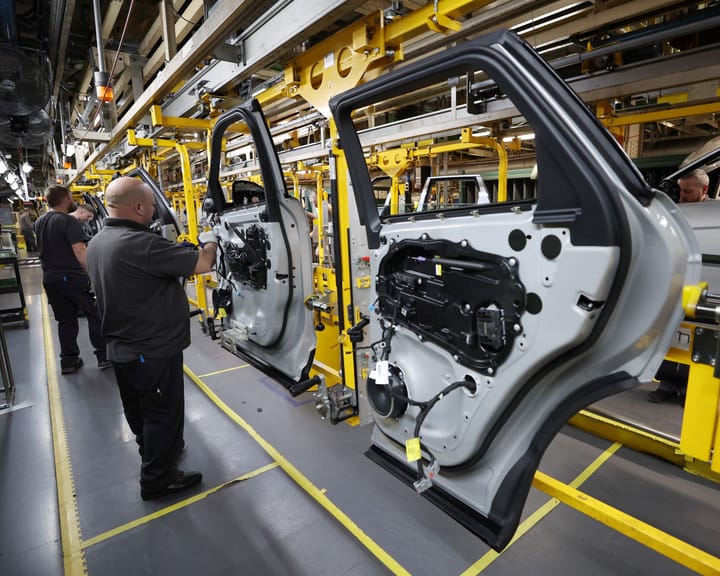
Jaguar Land Rover suppliers voice ‘everything is against us’ amid cutbacks
David Roberts, chair of Coventry-based Evtec, says the outlook for Britain’s automotive sector is grim, with “everything against us.” Evtec is a tier 1 supplier to Jaguar Land Rover, which this week announced 4,000 job cuts over two years despite chancellor John Healey’s attempt to talk
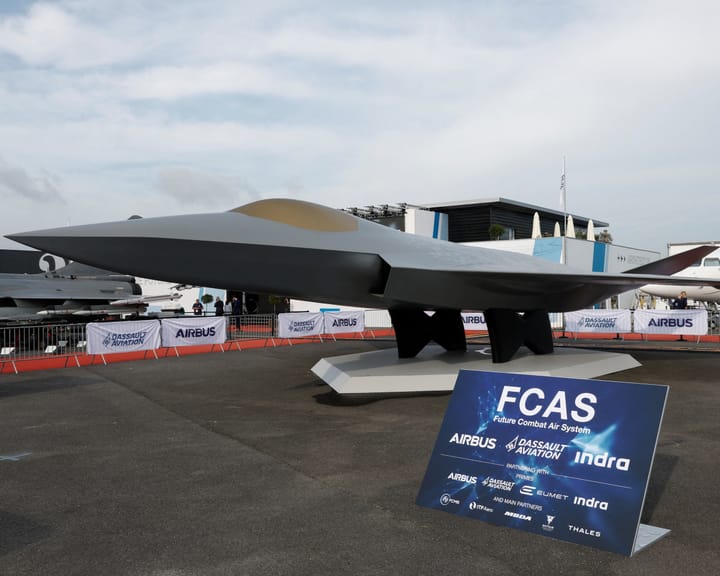
Europe’s fighter jet plans in disarray: what comes next?
When former ECB president and Italian PM Mario Draghi urged Europe to catch up economically with the US and China, defence collaboration was prescribed. No more should each nation build independent boats, tanks or jets; allies should share costs and technologies.
Europe stumbled at the first hurdle. German Chancellor Friedrich
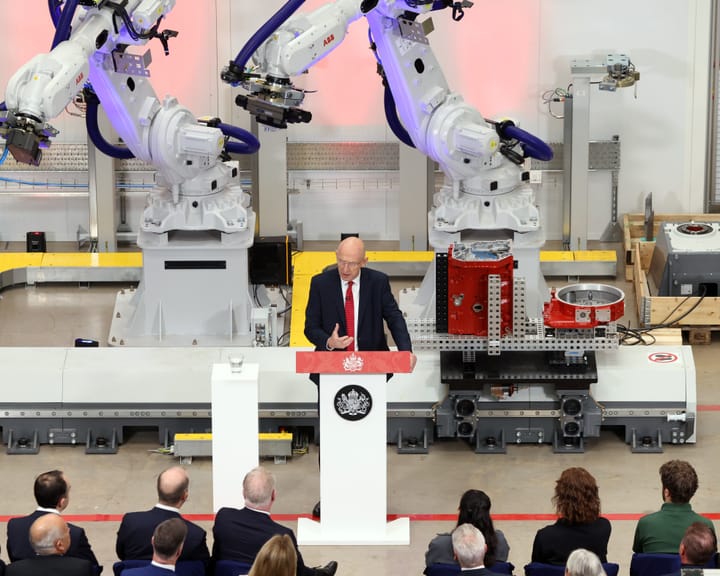
John Healey supports growth but insists Labour must be truthful about spending
John Healey has stated that his primary goal as chancellor will be to boost economic growth, while acknowledging that Labour must be straightforward about controlling public spending at next month's budget.
In his first major address since assuming the role in July, Healey said the leading focus of