
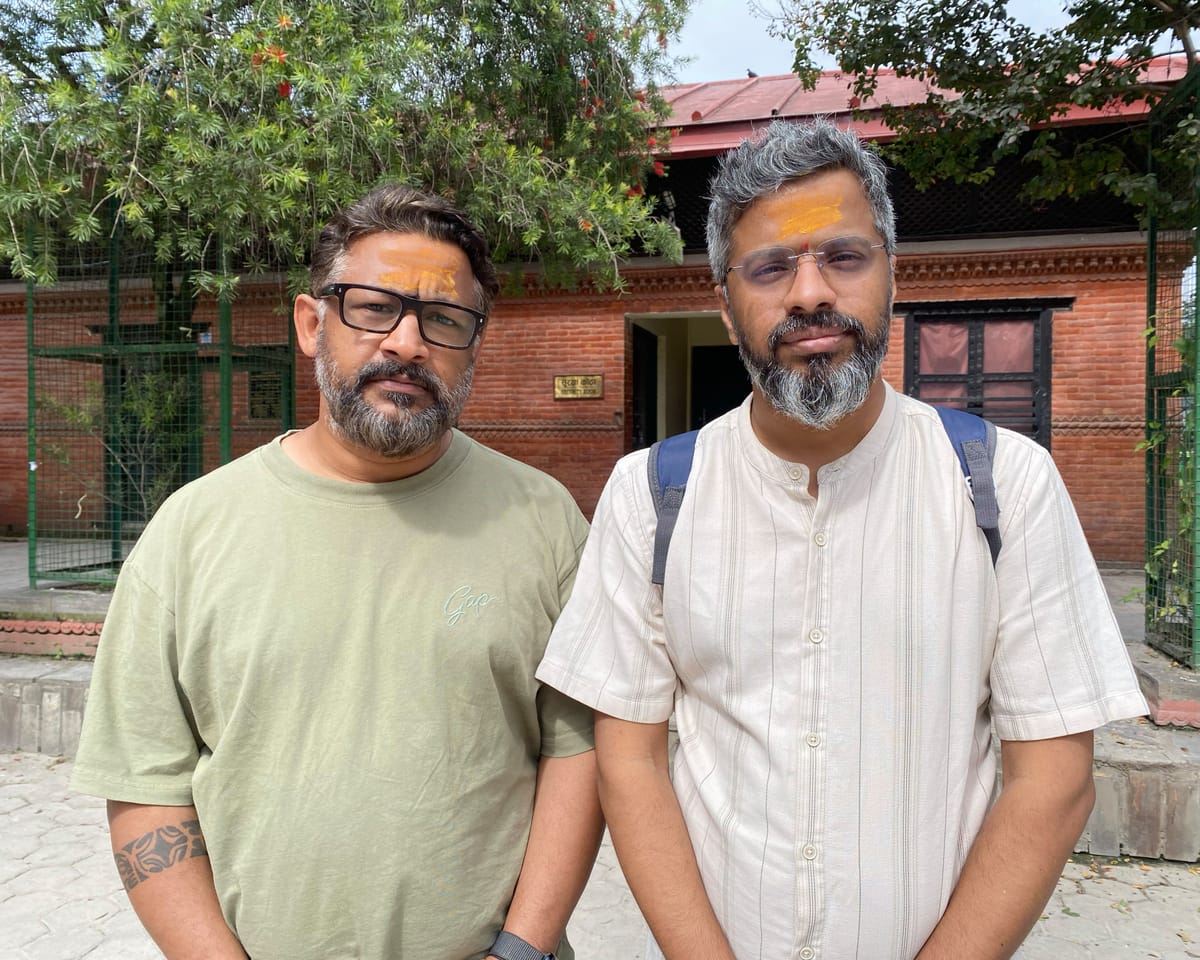
Beneath a scorching sun in Kathmandu, Santosh Swaminathan and his cousin Nathan Subramanian pause their search for missing relatives to visit a temple and offer prayers.
After losing contact with Swaminathan's sister and her husband following severe flooding last week, they travelled from India to Nepal. As they await army reconstruction of roads and bridges leading to the areas where their relatives were last known, their anxiety grows.
Alongside other families of missing Australians, they have begun taking independent action. They have arranged four-wheel drive vehicles and entered the flood-affected zones to conduct their own searches.
Swaminathan's sister, Chitra Venkatraman, aged 46, and her husband, Venkatraman Balakrishnan, aged 52, were among fifteen Australians on a spiritual journey to Mount Kailash with the Himalayan Glacier Adventures tour group. Overall, more than 5,000 people have been reported missing across Nepal, with an additional 546 in the Tibet region of China following the disaster, which has caused over 1,200 deaths. Thirty-six Australians remain unaccounted for.
"They are simply fun-loving people," says 42-year-old Swaminathan of the missing New South Wales couple. "My sister has a wonderful sense of humour... They are a very affectionate family. We miss them deeply right now."
Over the weekend, the pair rented a four-wheel drive in Kathmandu and travelled up the valley. The conditions present serious hazards: roads give way beneath vehicles, landslides occur frequently, and persistent rainfall severely limits visibility. Extended delays are common, and when sections of road collapse, travellers exit their vehicles to fill the gaps with rocks. Portions of the valley lack electricity, and clean water and food are scarce.
Despite these dangers, 45-year-old Subramanian explains they felt compelled to act. They succeeded in reaching Trishuli, a town approximately 40km from Kathmandu, though a further 20km separated them from Syabru Besi, where the Australians had been.
"We brought a car, food, everything," Subramanian states. "The conditions are extremely poor. It's been terrible – beyond Trishuli, the road simply ended."
"It was a gamble, a very dangerous one. Yet it is all we could do. As family members, we must exhaust every possible option."
The day following their attempt, a major mudslide occurred on the road just below Trishuli, trapping army personnel, aid workers, and journalists overnight.
Additional families dispatched another search vehicle on Wednesday to locate the missing group, which comprises Canadians, Americans, Singaporeans, British citizens, and Australians. They are hopeful of reaching the area where the group was staying.
"We are attempting every available avenue," Swaminathan explains.
Two developments provide some encouragement to the families. Firstly, the group was located approximately a 45-minute drive from the border area with Tibet, which was devastated by the surge of water and rock that swept down the valley. Secondly, the phones of other group members registered signals last Wednesday – one as late as 2:30pm, several hours after the flood struck.
In Kathmandu, the family has contacted the Australian and Indian embassies. They have met with Nepali politicians. They have provided any information to police and visited hospitals as the injured and deceased are brought in from Rasuwa, where the flooding caused the greatest destruction.
Swaminathan maintains communication with the couple's son, 22-year-old Akash Venkatraman, who resides in Sydney with his younger brother. According to Swaminathan, they are receiving support from family there.
On Tuesday, Australian ambassador to Nepal Simon Ernst cautioned families against entering the flood zone.
"We recognise that for those with missing relatives, this is an extraordinarily painful period," he said. "Please be assured that we are working continuously... to locate loved ones."
"A further reminder, please refrain from travelling to the affected area. We remain in the monsoon season; the possibility of additional flooding is very real, and access to flood-damaged regions is extremely challenging, if not impossible."
Limited technology available to the Nepali army has constrained search operations.
On Thursday, the Australian government revealed it was sending a team of specialist drone operators to assist with search efforts. However, families are questioning why Nepal did not request technical assistance earlier.
Subramanian acknowledges the army is performing as best it can and expresses confidence in their abilities, while recognising their technological resources are restricted.
"From the outset, they should have actually sought support from other governments," he states. "Outcomes could have been different."
Amid the heat and disorder of Kathmandu, the pair continue their efforts. Sustained by anxiety and determination, they remain committed to bringing their family members home.
"Today we find ourselves in a position where we have no certainty about tomorrow," Subramanian says.
"We have no idea what comes next. We are attempting to explore every possible avenue as civilians. We hold onto the belief they are still alive, and now we are praying for a miracle."
Read next
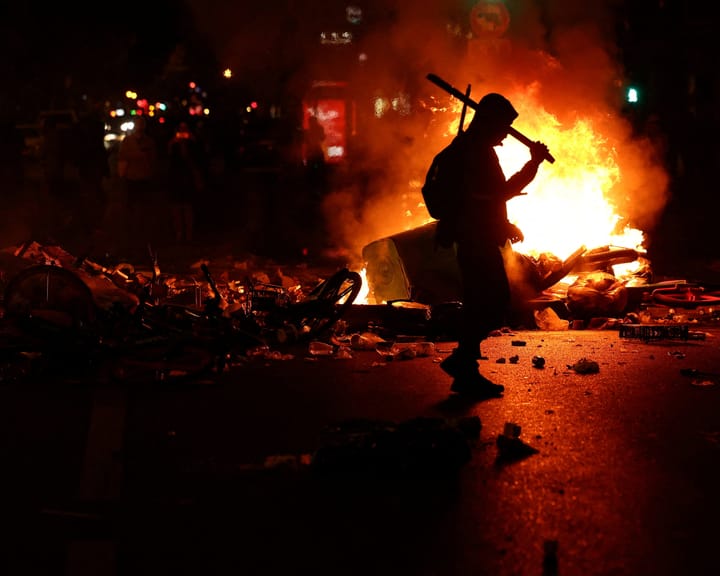
Interior Minister Admits French Police Lost Control Amid Riots
France’s Prime Minister has directed regional authorities to consider implementing partial curfews in certain cities following an admission by the government that police lost control during violent protests over the weekend. Sébastien Lecornu stated after an emergency cabinet meeting that he was determined to restore public order and suggested
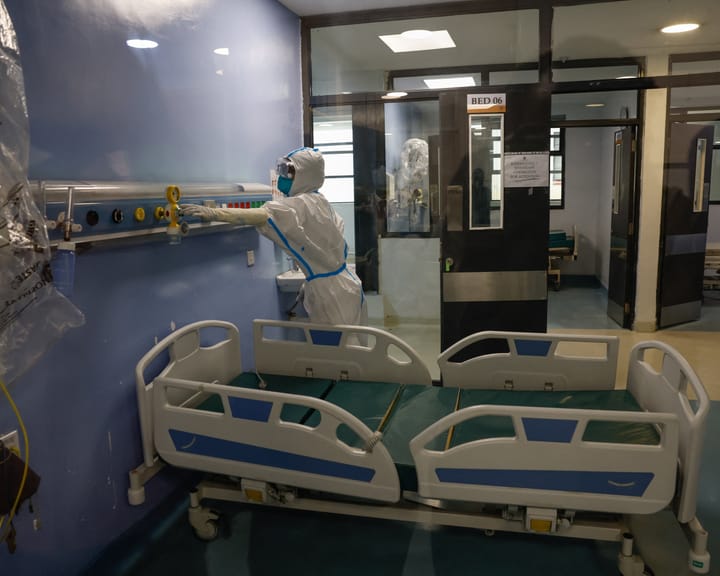
Kenya's Latest Ebola Case Exposes Gaps in U.S. Health Services Following Trump's Budget Cuts
In Kenya, a third individual has tested positive for Bundibugyo ebolavirus, marking the nation's first cluster of Ebola cases. This development occurs as the second-largest Ebola outbreak in history continues to impact the region, resulting in over 4,300 deaths and more than 9,000 infections.
The

France in Chaos as Looting Extends into Second Night: 'War Zone' Descriptions Abound
In the early hours of Monday, two motorbikes carrying passengers each stopped at a traffic light in a backstreet near Paris's bustling rue de Rivoli. One rider remarked to the other about targeting areas with high foot traffic and elaborate shop windows. Shortly thereafter, ten men wearing ski