
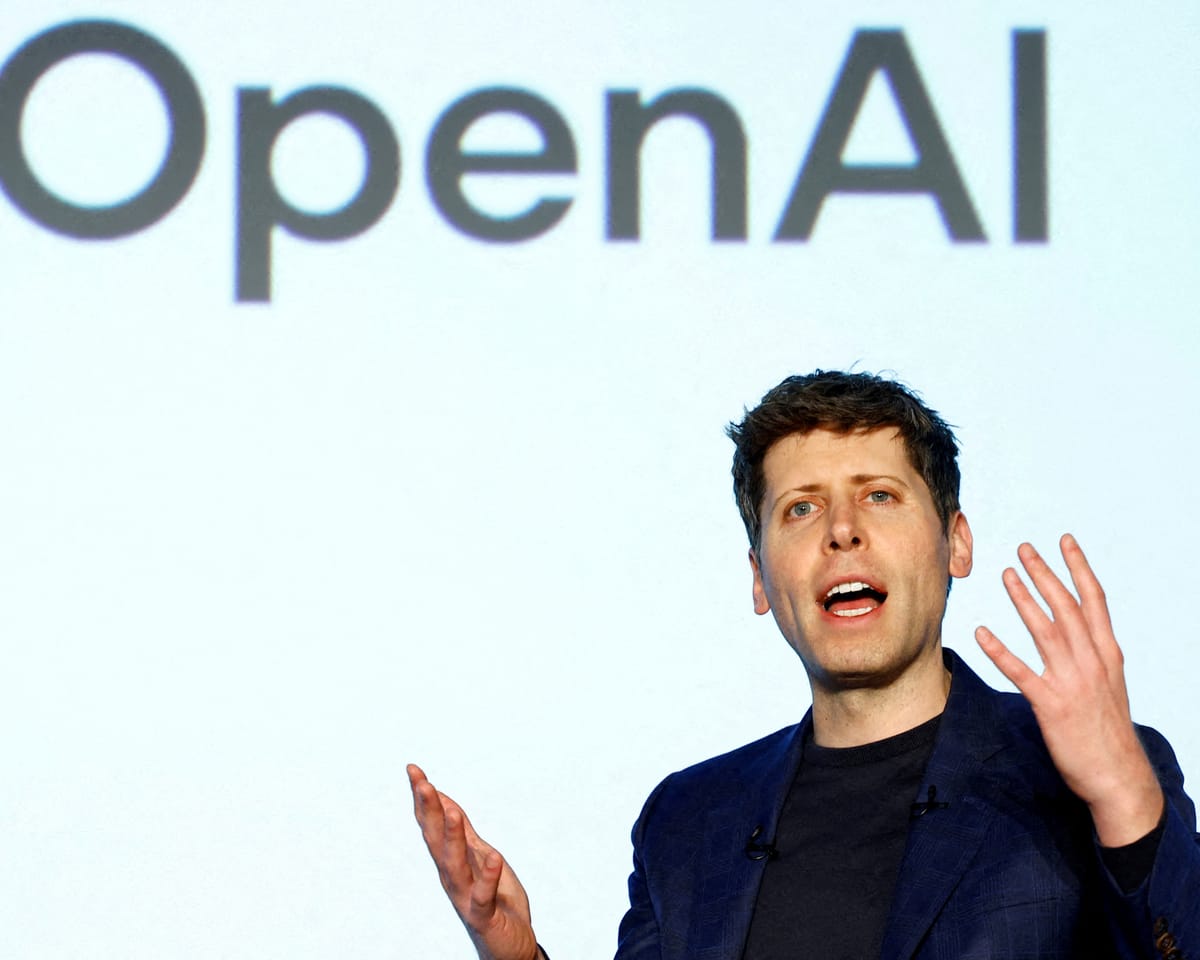
Sam Altman, head of one of the world’s leading artificial intelligence firms, has finalized an agreement with the British government to assess the use of advanced AI systems in sectors such as justice, security, and education.
The OpenAI CEO, whose company is valued at $300 billion and provides the ChatGPT language models, signed the memorandum of understanding with Science and Technology Secretary Peter Kyle on Monday.
This follows a similarly broad partnership between the UK government and OpenAI’s competitor, Google, which some critics previously labeled “highly concerning,” citing worries that public services might become overly reliant on private tech firms, potentially complicating regulatory oversight.
Under the new agreement, OpenAI and the government will work together to find ways to integrate advanced AI models into public services, aiming to improve efficiency for officials and assist citizens in accessing government services more easily.
The collaboration will focus on developing AI solutions for key challenges facing the UK, including justice, defense, security, and education, while fostering initiatives to increase public understanding of AI.
Altman has previously suggested that AI research efforts could soon achieve artificial general intelligence—performance matching human capabilities across various tasks.
Meanwhile, public opinion in Britain remains divided on the implications of rapidly advancing AI technology. A recent Ipsos survey found that 31% of respondents are primarily excited about its potential but have some reservations, while another 30% are more concerned about risks but still see possible benefits.
Kyle said: “AI will be crucial in driving national transformation—whether in healthcare reform, expanding opportunities, or boosting economic growth.”
He emphasized that such progress “cannot happen without collaboration with companies like OpenAI” and stated the partnership would ensure Britain plays a key role in shaping the future of this transformative technology.
Altman added: “The UK has a strong tradition of scientific leadership and was among the first to acknowledge AI’s potential through its action plan. Now, it’s time to act on these ambitions to achieve widespread benefits.”
OpenAI plans to expand its UK operations beyond its current workforce of over 100 employees.
As part of the earlier deal with Google, the Department for Science, Innovation and Technology announced that Google DeepMind—led by Nobel Prize-winning scientist Demis Hassabis—would collaborate with government experts to facilitate the adoption of emerging technologies and improve operational efficiency.
Read next

US officers worry Meta smart glasses could covertly record them
In January, the NYPD’s counterterrorism unit warned officers about a new security threat: Ray-Ban Meta glasses. A memo directed officers to “conduct thorough inspections of all eyewear permitted within inmate cells,” cautioning that recently arrested individuals could use the devices’ small cameras and microphones to record inside police

Google's Pixel 11 sets new standard for flagship phones, review finds
Google’s Pixel 11 continues to define what a base flagship phone should deliver, with leading cameras, extended software support and nearly all the features of its pricier siblings.
The standard Pixel 11 is priced at £879 (€999/$899/A$1,499), £80 higher than its previous version, reflecting ongoing

AI Expert Father of Three Shares Essential Insights for Parents on Artificial Intelligence
A father once promised his child they would write a story together called "The Day Nobody Went to Disneyland." The plot imagined a perfect day when the entire world avoided the park, expecting crowds, leaving it completely empty for a father and child to enjoy alone. Three decades