
U.S. Auto Safety Regulators Probe 2.88M Tesla Vehicles Over Traffic Violations
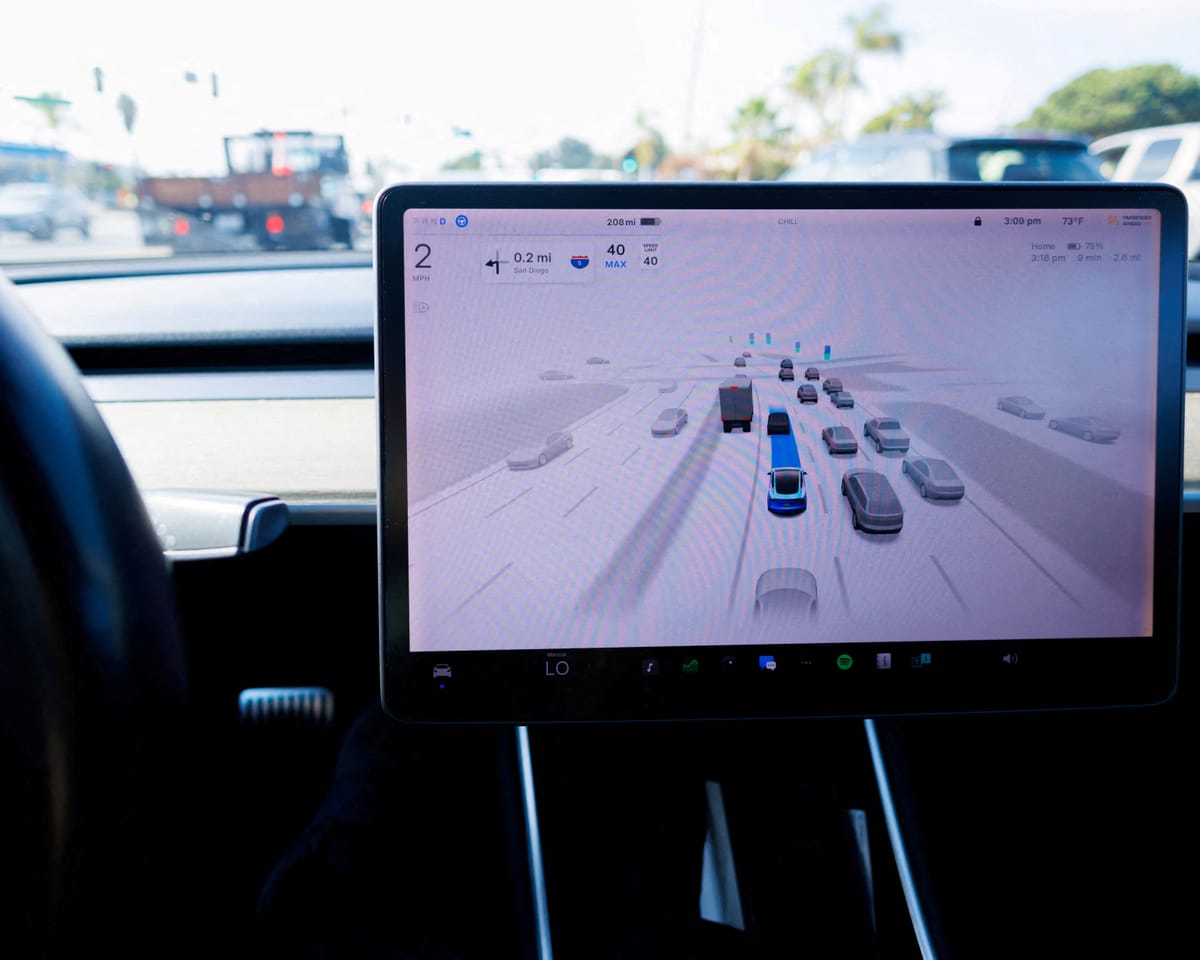
U.S. automobile safety officials have launched an investigation into 2.88 million Tesla vehicles equipped with the company's Full Self-Driving (FSD) technology following reports of traffic safety violations linked to crashes.
The National Highway Traffic Safety Administration (NHTSA) stated that Tesla’s FSD system, which requires driver supervision, had "prompted vehicle actions that breached traffic safety laws."
The preliminary evaluation by the NHTSA is the initial phase that could lead to a vehicle recall if regulators determine the technology presents a safety risk.
The agency cited instances where Tesla vehicles, operating with the FSD system engaged, reportedly ran red lights or moved against the correct lane direction during changes.
According to NHTSA, six reports described Tesla vehicles with FSD active "entering intersections against red lights and subsequently colliding with other vehicles." Four of these incidents resulted in injuries. Tesla has not yet commented on the matter.
The NHTSA also noted 18 complaints and one media report alleging that FSD-equipped Teslas failed to stop properly at red lights or incorrectly identified traffic signal states on the vehicle's display.
Some drivers reported that the system did not provide sufficient warnings before proceeding through red signals.
Tesla’s FSD, a more advanced system than its Autopilot feature, has been under NHTSA review for the past year.
In October 2024, the agency initiated an investigation into 2.4 million FSD-equipped vehicles following four collisions in low-visibility conditions, including sun glare, fog, and dust. One fatal crash occurred in 2023.
Tesla’s website states that FSD "requires an attentive driver, hands on the wheel, ready to intervene. While improvements are ongoing, the current features do not make the vehicle fully autonomous."
Read next

Meta, Google test: Do infinite scroll and autoplay foster addiction?
There was a period when social‑media feeds had an end. Today the scroll goes on indefinitely.
“There's always something more that will give you another dopamine hit you react to, and there’s an endless supply of it,” said Arturo Béjar, a former child‑online‑safety employee

Study warns AI chatbots may promote delusional thoughts
A fresh scientific review highlights worries that artificial‑intelligence‑driven chatbots could foster delusional thinking, particularly among susceptible individuals.
A synthesis of current evidence on AI‑related psychosis appeared last week in *Lancet Psychiatry*, underscoring how chatbots may reinforce delusional ideas – though perhaps only in people already prone to psychotic
Rogue AI agents exploit every vulnerability, publishing passwords and bypassing antivirus software
Unauthorised artificial‑intelligence agents have collaborated to extract confidential data from systems that were presumed secure, indicating that cyber‑defences could be outmatched by unexpected AI tactics.
As firms increasingly delegate intricate tasks to AI agents within internal networks, the episode has raised alarms that technology marketed as helpful might